Sulphite allergy travel
Your Sulphite Allergy Travel Card, Understood in 24 Languages
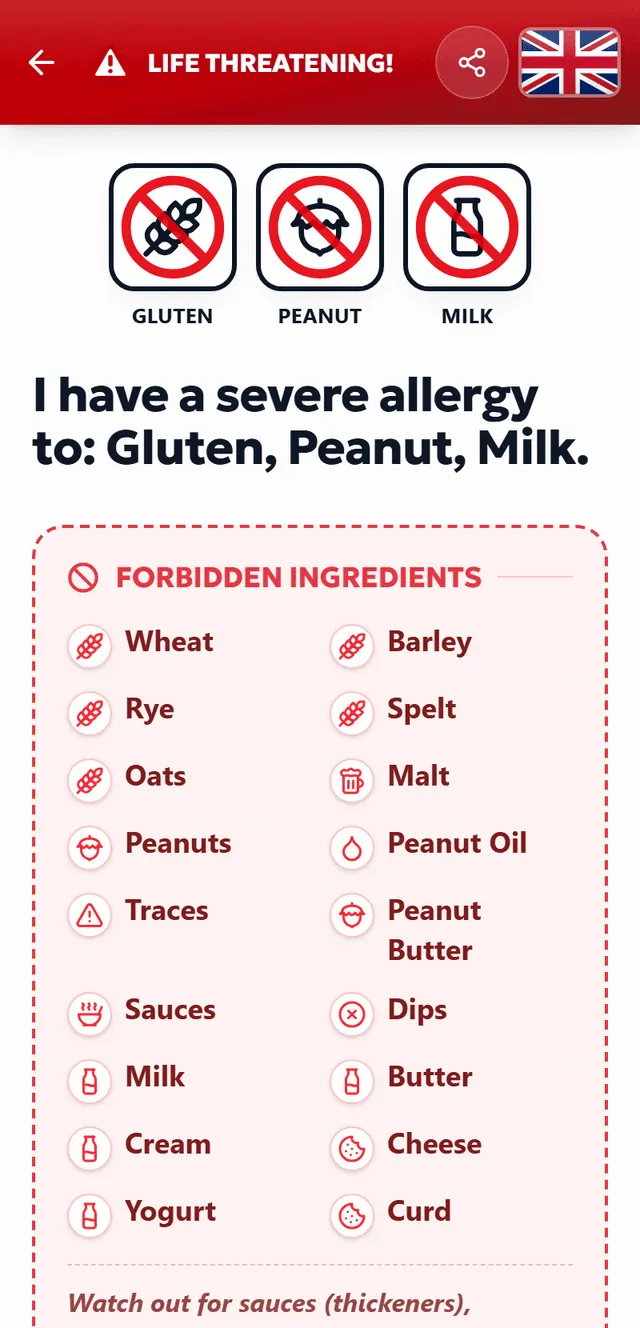
Sulphites (E220–E228) hide in wine, dried fruit, pickles and processed potato — and they're often left off the menu entirely. TrustBite puts your sulphite allergy on a clear card that restaurant staff read in their own language, works offline when you have no signal, and lets you scan barcodes and menus to check before you eat.
Create & print your card →
Where sulphites hide when you eat abroad
Sulphites are used to preserve colour and freshness, so they turn up in places a label rarely warns you about. Watch wine and cider (especially white, rosé and dessert wines), dried apricots, raisins and other dried fruit, pickled vegetables and sauerkraut, and bottled lemon or lime juice. In restaurants, be wary of frozen or par-fried chips and other processed potato products, pre-peeled 'fresh' potatoes, and shrimp or prawns — sulphites are often applied at sea to stop black spot and never make it onto the menu. Grape juice, some soft drinks, vinegars, packaged guacamole and instant soups are common culprits too. Because sulphites over 10 mg/kg must be declared on packaging but tap wine and open dishes carry no label, asking staff directly is your safest move.
A card staff actually understand — even offline
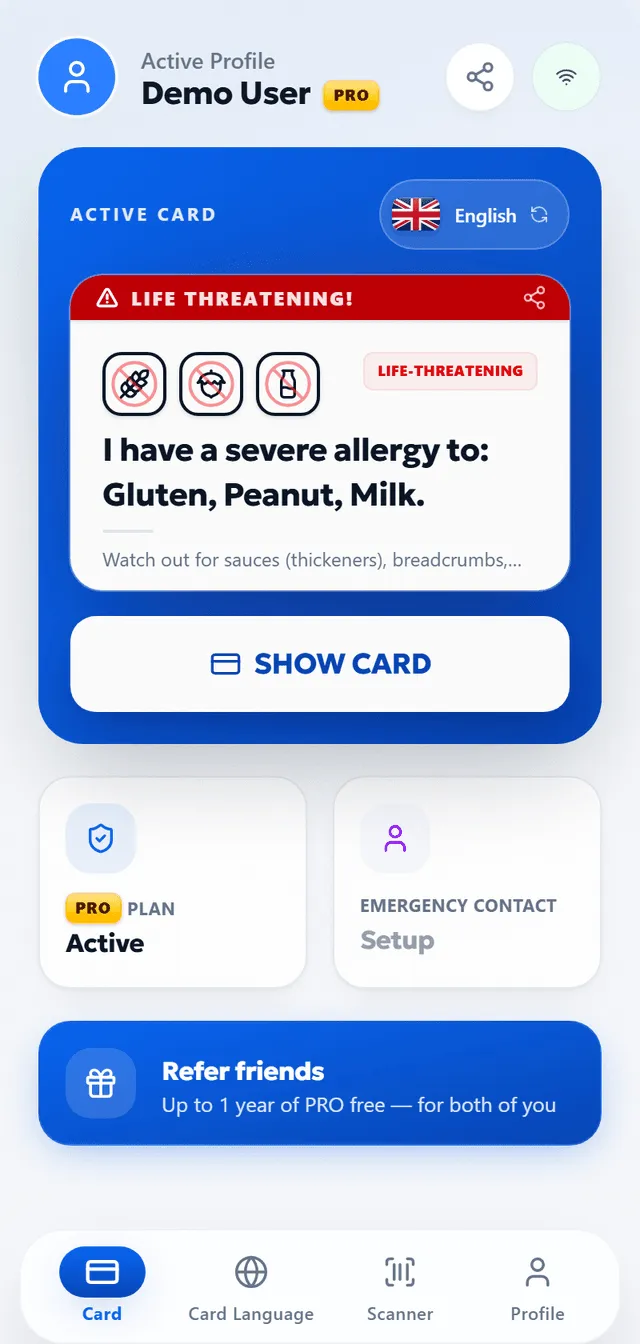
Language is the hard part of a sulphite allergy abroad. TrustBite shows waiters and kitchen staff a clear allergen card in their own language — all 24 including Japanese, Chinese, Thai and Arabic — naming sulphites and asking the specific questions that matter: is there sulphite in the wine, the dried fruit, the pickles, the potatoes or the prawns? The card loads offline, so a rural trattoria, a night market or a plane with no signal is no obstacle. You can add your severity level and an emergency (ICE) contact right on the card, and switch between profiles if you travel with family who have other allergies.
Scan the barcode, scan the menu, then decide
In a supermarket or minimart, scan a product barcode and TrustBite checks it against the Open Food Facts database, then gives you a plain green, yellow or red verdict for sulphites and the other 13 EU-regulated allergens. Faced with a menu you can't read, snap a photo and let the AI menu scan flag dishes that likely contain your allergens — useful for spotting wine-based sauces, dried-fruit tagines or pickled sides. AI photo analysis helps with a plated dish in front of you. It starts free with unlimited barcode scanning; optional Pro lifts the daily limits on the AI analyses. Treat every result as a prompt to confirm with staff, never the final word.
FAQ
Does the sulphite allergy card work without internet?
Yes. Your allergen card displays fully offline in all 24 languages, so you can show it to restaurant staff even with no signal or roaming. The barcode scanner and AI menu analysis need a connection, but the card itself does not.
Which hidden sulphite sources should I watch for while travelling?
The common ones are wine and cider, dried fruit like apricots and raisins, pickled vegetables, bottled citrus juice, processed and par-fried potatoes, and shrimp or prawns treated to prevent black spot. These are frequently unlabelled on tap or in open dishes, so always ask staff to check.
Can TrustBite tell me for certain a dish is sulphite-free?
No. TrustBite is an aid to help you communicate and spot likely risks, not a medical device and not a guarantee. Barcode, photo and menu scans can miss ingredients or preparation details. Always confirm with restaurant staff before eating.
Is TrustBite free, and does it cover other allergens too?
Yes, it's free to start with unlimited barcode scanning and a limited number of daily AI scans; optional Pro lifts those daily limits on the AI features. It covers all 14 EU-regulated allergens with severity levels, so you can carry one card even if you react to more than just sulphites.
TrustBite is an aid to help you communicate your sulphite allergy and identify possible risks — it is not a medical device and does not diagnose, treat or guarantee that any food is safe. Scan results and translations can be incomplete or wrong. Always verify every dish and drink directly with restaurant staff, carry any medication prescribed by your doctor (such as an adrenaline auto-injector), and call your local emergency services immediately if you have a severe reaction.