Thailand travel guide
Your allergy card in Thai, for eating safely in Thailand
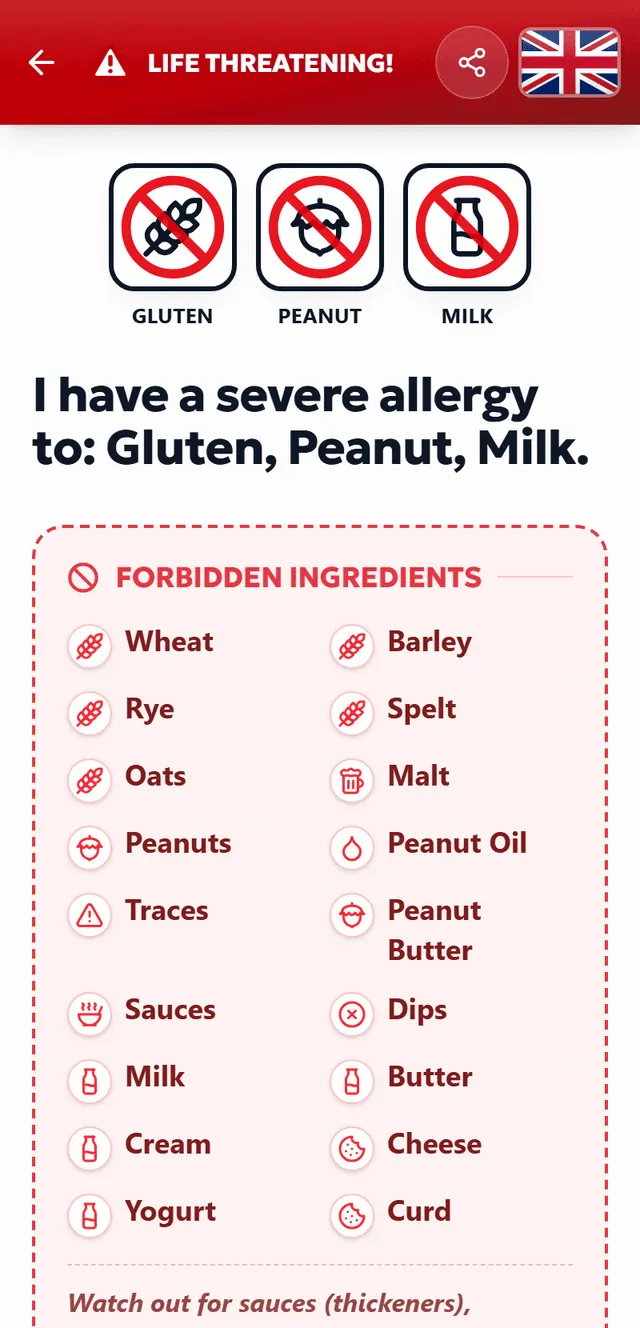
Thai food is built on fish sauce, shrimp paste and peanuts — often in dishes that look plant-based. TrustBite shows restaurant staff a clear allergen card written in Thai (one of 24 card languages), works fully offline, and adds barcode, menu and photo scanning so you can travel Thailand without guessing what's in the wok.
Create & print your card →
Why a phrasebook card in Thai beats a printed sheet
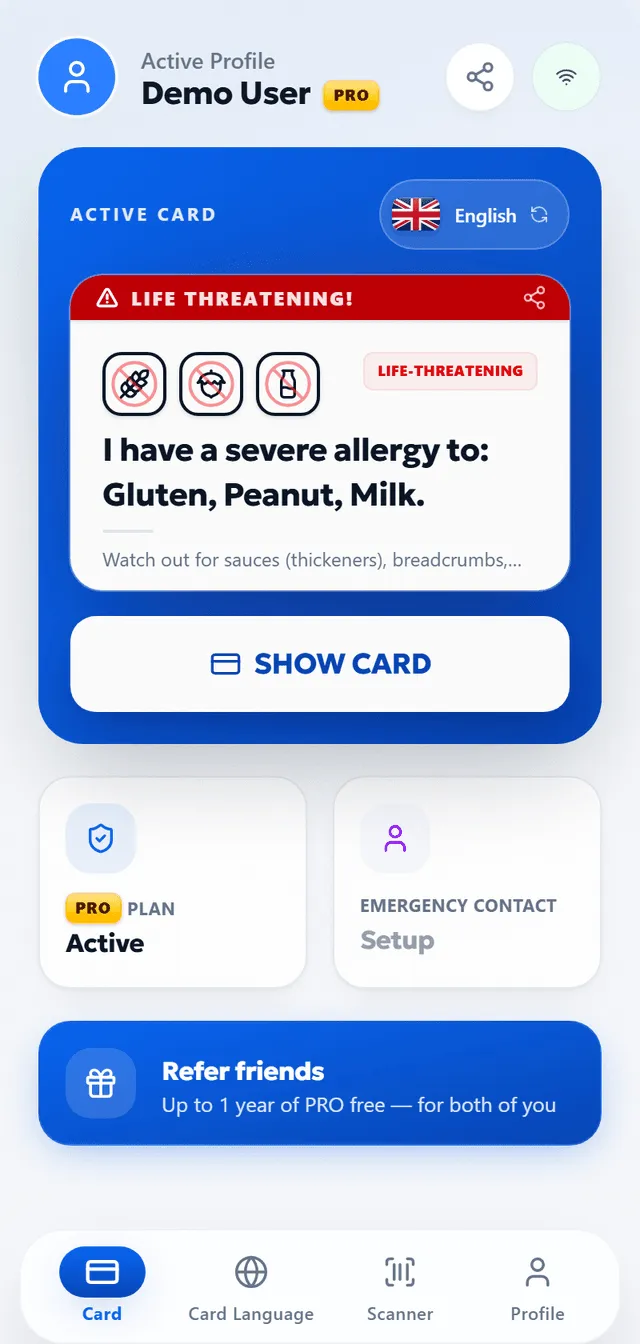
A single-country printout can only say one thing, in one wording, and it's stuck in your bag when the plate arrives. TrustBite renders your exact allergens on a card in Thai (ภาษาไทย) that you hand to staff at the table — with clear allergen names, severity levels and your emergency (ICE) contact right on the card. It works with no signal, so it's just as reliable in a Bangkok street stall or a Koh Lanta beach shack as in a hotel restaurant. And because the card is generated from your profile, it covers all 14 EU-regulated allergens at once instead of the one or two a phrasebook line remembers.
The Thai dishes and ingredients to watch
Fish sauce (nam pla) and shrimp paste (kapi) are the backbone of Thai cooking, so 'vegetable' dishes are rarely fish- or shellfish-free. Som tam papaya salad routinely hides dried shrimp, fermented crab (pu pla ra) and crushed peanuts; pad thai carries peanuts, egg, dried shrimp and fish sauce; tom yum and most curry pastes (green, red, massaman) start from shrimp paste and fish sauce, and massaman and satay add peanuts. Nam prik dips are shrimp-paste based, and stir-fries lean on oyster sauce (nam man hoi). Soy sauce means gluten for coeliacs. Street-food woks and shared oil also make cross-contamination real, so ask whether your dish is cooked separately.
Scan the barcode, the menu and the plate
Beyond the card, TrustBite helps you check food before it reaches you. Scan a packaged snack's barcode (via the Open Food Facts database) for a plain green, yellow or red verdict. Point the AI menu scanner at a Thai menu to flag dishes likely to contain your allergens, and use AI photo analysis on a plate you're unsure about. These features do the heavy lifting; the Thai card handles the human conversation. TrustBite is free to start, with unlimited barcode scanning — optional Pro lifts the daily limits on the AI tools — so you can try it before your trip.
FAQ
Does the allergy card work without internet in Thailand?
Yes. Once your profile is set, the Thai allergen card renders fully offline, so you can show it in street stalls, islands and rural areas with no signal. Barcode, menu and photo AI scanning need a connection, but the card itself never does.
Which Thai foods most often hide allergens?
Fish sauce (nam pla) and shrimp paste (kapi) are in most curries, som tam and dips; peanuts appear in pad thai, satay and massaman; dried shrimp and fermented crab hide in som tam; oyster sauce is common in stir-fries; and soy sauce contains gluten. Always confirm with staff, as recipes vary.
Can it show more than one allergy at once?
Yes. The card is generated from your profile and covers all 14 EU-regulated allergens together, each with a severity level, rather than a single phrasebook line. You can also keep separate profiles for different travellers.
Is TrustBite a medical device?
No. TrustBite is a communication aid to help you explain your allergies and screen foods. It does not diagnose, treat or guarantee safety. Always verify ingredients with restaurant staff and carry any medication your doctor prescribes.
TrustBite is a communication aid, not a medical device. It does not diagnose or treat allergies and cannot guarantee a dish is safe — recipes, ingredients and kitchen practices vary, and cross-contamination is common in Thai street food. Always confirm your allergens directly with restaurant staff before eating, carry any medication your doctor has prescribed, and in a severe reaction call Thailand's emergency services on 1669 (or 191) or go to the nearest hospital immediately.