Food allergy travel · Japan
Your allergy card in Japanese — ready before you walk into the izakaya
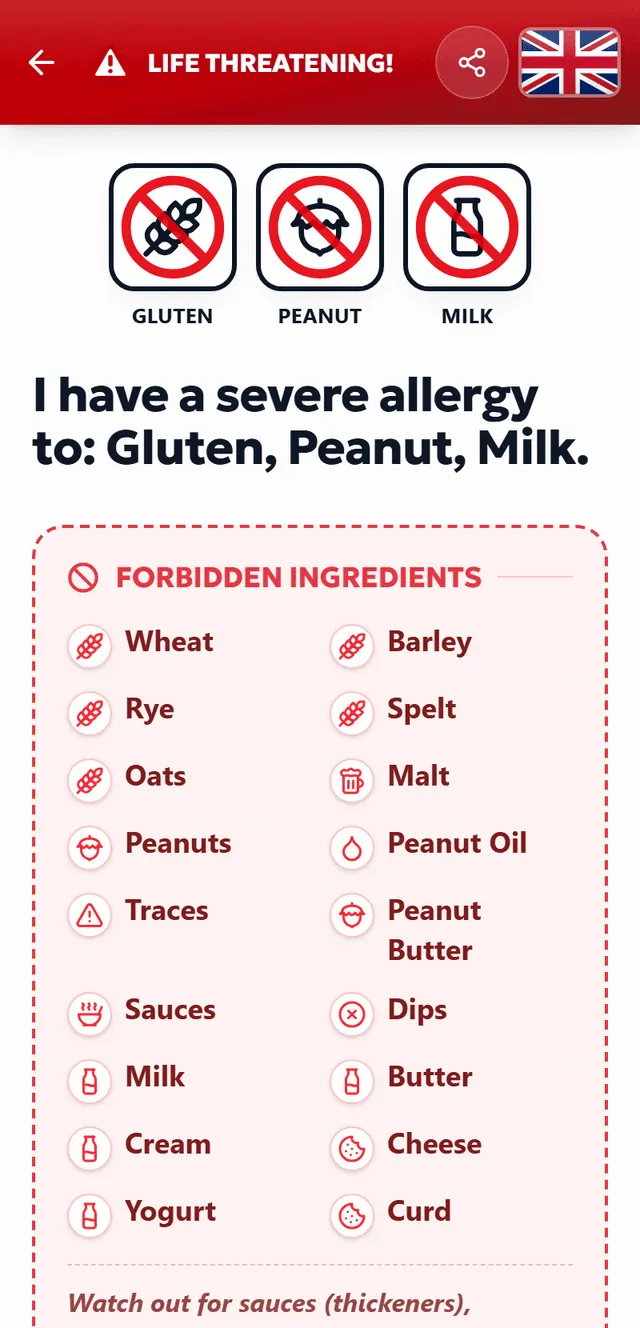
Japan is one of the hardest places to eat safely with allergies: dashi (bonito/fish stock) hides in almost every soup, sauce and simmered dish, and soy sauce contains both wheat and soy. TrustBite shows staff a clear allergen card written in Japanese — fully offline — and lets you scan barcodes and photograph menus when you're unsure. An aid for real conversations, not a printed guess.
Create & print your card →
Why a printable card falls short in Japan
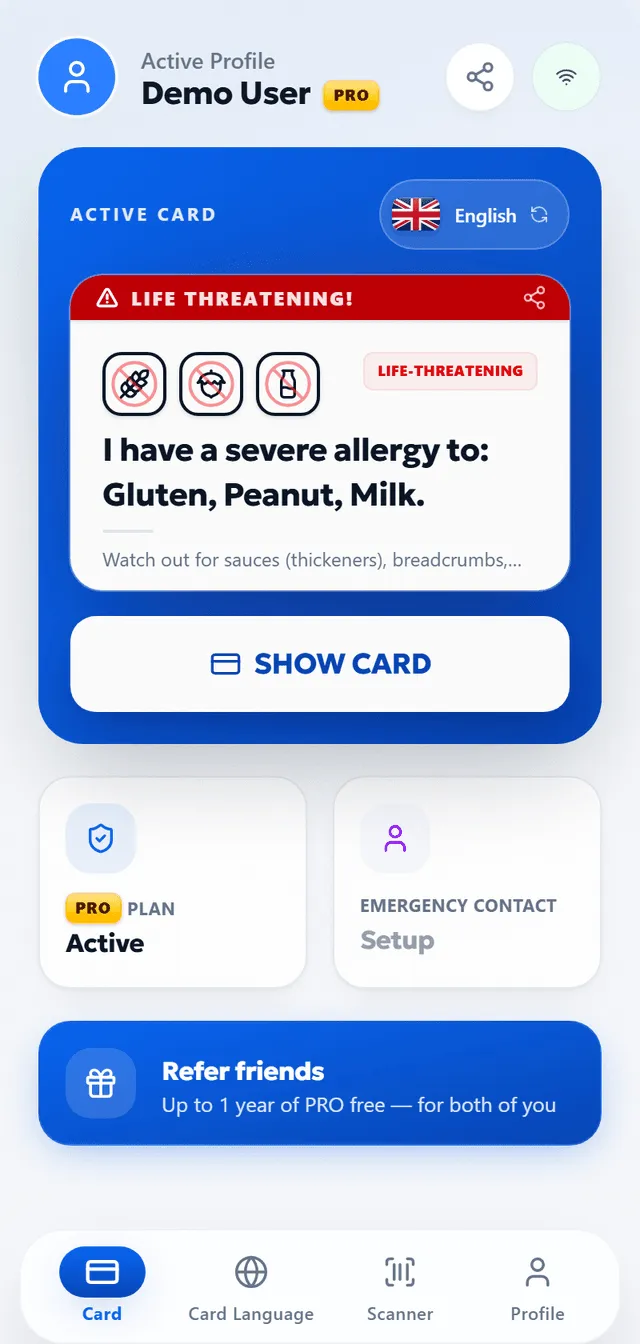
Single-country printouts get creased, go out of date, and can't answer follow-up questions. TrustBite carries your exact allergens — all 14 EU-regulated ones, with severity levels — on a card staff can read in natural Japanese, right from your phone. It works with no signal on the shinkansen or in a basement ramen shop, and you can switch the same profile to any of 24 languages if your trip continues to Korea, Thailand or beyond. Add an emergency (ICE) contact so it's on the card if you can't speak for yourself.
The Japanese allergen traps worth naming out loud
Dashi made from katsuobushi (dried bonito) is in miso soup, tamagoyaki, most noodle broths and countless simmered (nimono) dishes — a genuine problem for fish allergies and strict vegetarians alike. Standard shoyu (soy sauce) and the wheat-based seasoning in tempura batter, gyoza, and karaage make celiac and wheat allergies very hard; even 'plain' teriyaki and ponzu contain soy sauce. Watch for hidden seafood: surimi (imitation crab) in salads, shrimp in okonomiyaki and fried rice, and bonito flakes sprinkled on top of takoyaki or ohitashi. Nut allergies face peanut in some dressings and sauces, plus cross-contact at counters frying many things in shared oil. Read barcodes on konbini snacks and photograph a menu to get a green/yellow/red read before you order.
How TrustBite works while you travel
Set up your allergen profile once. Show the Japanese card to staff to open a clear conversation; scan a product barcode against Open Food Facts for an instant traffic-light verdict; or use AI photo and menu analysis to flag likely allergens on a dish you can't read. The card and your saved languages stay available offline. It's free to use with unlimited barcode scanning, and optional Pro lifts the daily limits on the AI analysis for longer or more complex trips. Always confirm with staff before eating — the app starts the conversation, it doesn't replace it.
FAQ
Is the allergy card actually written in Japanese?
Yes. Japanese is one of TrustBite's 24 supported card languages, so restaurant staff read your allergens in their own language. The card works fully offline, so it's ready even with no signal.
Can it help with dashi and soy sauce, which are in everything?
That's exactly the point of showing a detailed card plus scanning. You can list fish, wheat and soy on your profile so staff see them clearly, and use menu photo analysis to flag dishes likely to contain dashi or soy-sauce-based seasoning. Always verify with staff, as recipes vary.
Does the barcode scanner work on Japanese konbini products?
The scanner checks barcodes against the Open Food Facts database and gives a green/yellow/red verdict. Coverage is good for many packaged items but not every local product; when a product isn't found, rely on the card and staff confirmation.
Is TrustBite a medical device or safe for severe allergies?
No. TrustBite is an aid to help you communicate and check products — it is not a medical device and does not guarantee a dish is safe. Always confirm with restaurant staff, carry your prescribed medication, and call local emergency services (119 in Japan) for a severe reaction.
TrustBite is an aid to help you communicate about food allergies — it is not a medical device and does not diagnose, treat, or guarantee that any food is safe. Ingredients, recipes and cross-contamination vary by kitchen; always confirm directly with restaurant staff before eating and carry any medication your doctor prescribed. If you experience a severe allergic reaction, seek help immediately and call local emergency services (119 in Japan).