Gluten & Coeliac Travel
Travelling with a Gluten or Coeliac Allergy, Made Clearer
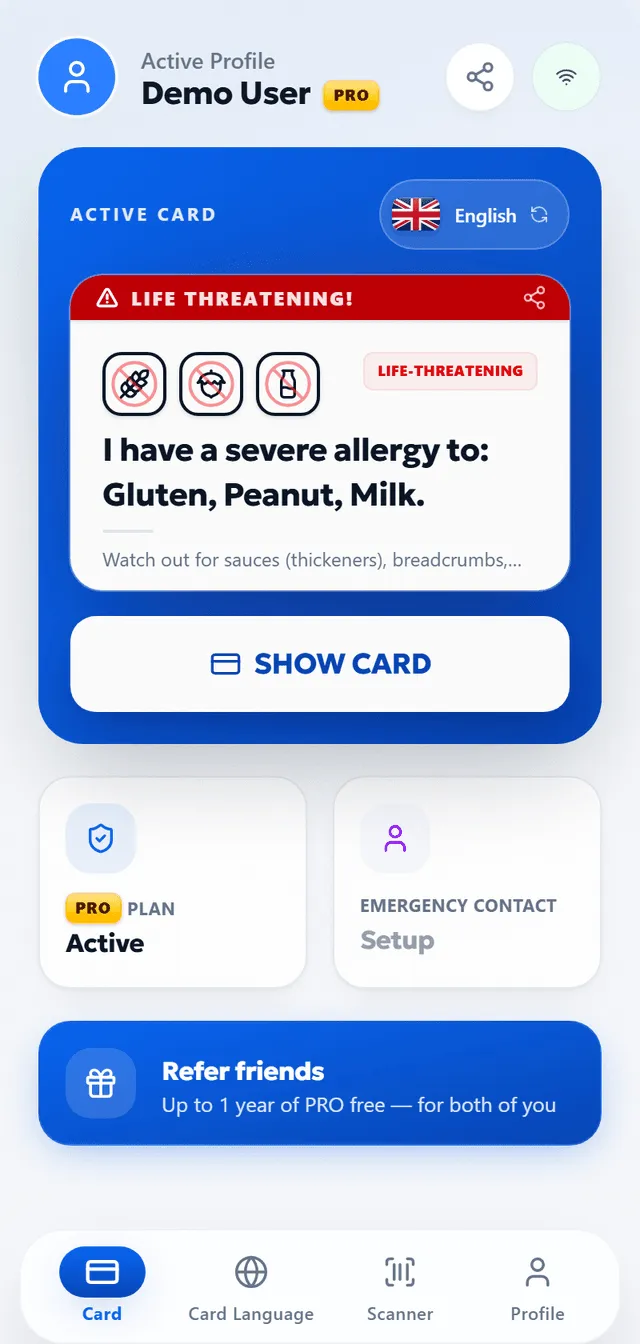
Language gaps are where gluten hides. TrustBite puts your gluten and coeliac needs on a card that restaurant staff read in their own language — 24 of them, including Japanese, Chinese, Thai and Arabic — even with no signal. Add barcode scanning via Open Food Facts and AI menu analysis, and you can question hidden sources like soy sauce, breaded dishes and flour-thickened sauces before they reach your plate.
Create & print your card →
Say it in their language, even offline
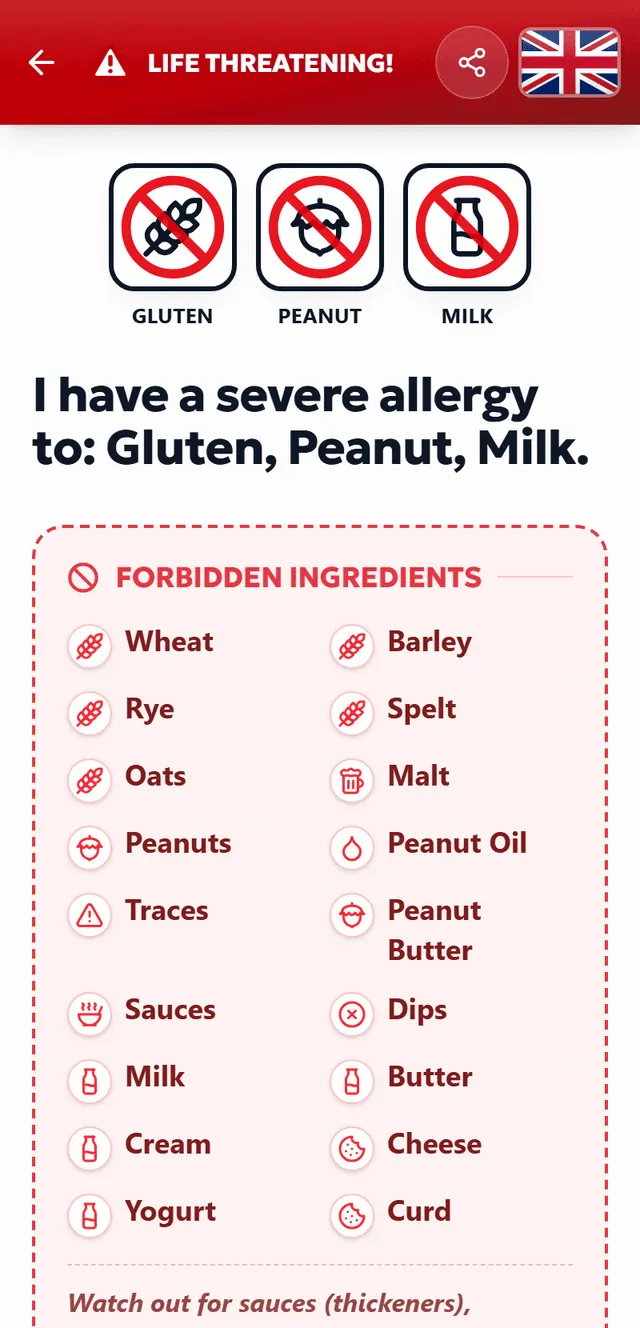
Wheat, barley and rye go by dozens of names abroad, and a phrase-book rarely covers coeliac cross-contamination. Your TrustBite card states exactly what you must avoid in the staff's own language, so the kitchen understands the first time. It renders fully offline — no roaming, no cafe Wi-Fi needed — so it works in a rural trattoria, a night market or a train dining car. Add an emergency (ICE) contact directly on the card so anyone can reach the right person fast.
Real hidden sources of gluten to watch abroad
Soy sauce is usually brewed with wheat, so sushi, dumplings, teriyaki and marinades often carry gluten — ask for tamari and confirm. Anything breaded or battered (tempura, schnitzel, fried calamari, korokke) is off-limits, and shared fryer oil means even 'plain' fries can be contaminated. Sauces, gravies, soups and curries are frequently thickened with wheat flour or a roux; malt vinegar, beer-battered fish, couscous, orzo, seitan, semolina pasta and communion-style breads are common traps. Buffets, shared toasters and pasta water are classic cross-contamination points.
Scan the barcode, scan the menu
In a supermarket, scan a product barcode and TrustBite checks it against Open Food Facts to flag gluten sources with a clear green, yellow or red verdict. At a restaurant, photograph the menu and the AI analysis highlights dishes likely to contain wheat, barley or rye so you know which to question. It covers all 14 EU-regulated allergens with severity levels, so travellers managing more than gluten are covered too. Free to use, with unlimited barcode scanning included; optional Pro lifts the daily limits on the AI analyses.
FAQ
Does the allergen card work without internet?
Yes. Your gluten and coeliac card renders fully offline, so you can show it to restaurant staff in remote areas, on planes or anywhere without signal. Barcode and AI menu scanning need a connection, but the card itself never does.
Which languages does the card support?
24 languages, including Japanese, Chinese, Thai and Arabic, plus most major European languages. You show staff a clear statement of what you must avoid in the language they actually read, reducing misunderstandings about wheat, barley and rye.
Can it catch hidden gluten like soy sauce or thickened sauces?
The card lets you spell out hidden sources, and the barcode and AI menu scans help flag likely gluten in packaged foods and dishes. Always confirm with staff directly — soy sauce, roux-based sauces and shared fryers are easy to miss.
Is TrustBite a medical device?
No. TrustBite is an aid to help you communicate and screen for gluten while travelling, not a medical device or diagnosis. Always verify ingredients with staff and carry any prescribed medication.
TrustBite is an aid to help you communicate and screen for allergens while travelling — it is not a medical device and does not provide medical advice or diagnosis. It cannot guarantee any food is safe or free from gluten or cross-contamination. Always verify ingredients and preparation directly with restaurant staff, carry your prescribed medication (such as antihistamines or an adrenaline auto-injector), and call your local emergency services immediately if you experience a severe reaction.