Travel with a peanut allergy
Your Peanut Allergy, on a Card Staff Read in Their Own Language
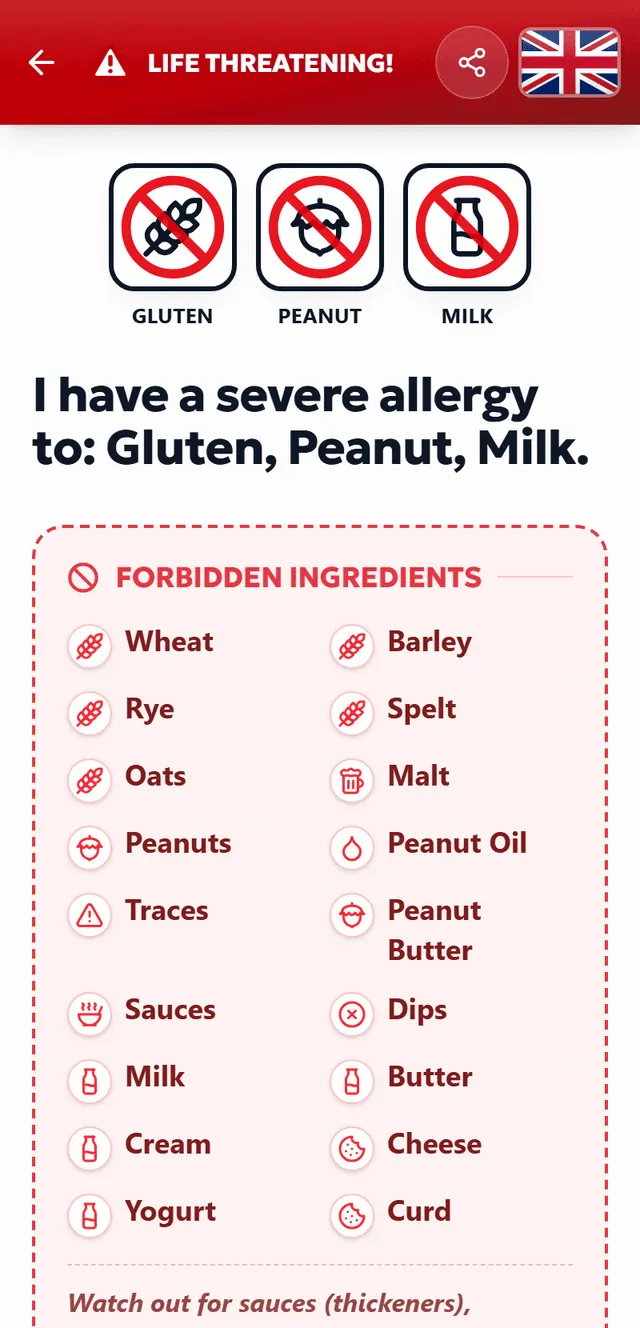
Peanuts hide in satay sauce, curry pastes, baked goods and shared fryers — and the kitchen may not speak your language. TrustBite puts your peanut allergy on a clear card that restaurant staff read in 24 languages, works offline when your data drops, and scans barcodes and menus to flag hidden peanuts before you order.
Create & print your card →
Where peanuts hide on the menu abroad
Peanuts and peanut oil turn up far beyond the obvious. In Southeast Asia, satay skewers, gado-gado, pad thai and many curry and dipping sauces are peanut-based; kung pao and other Chinese stir-fries often add peanuts. In West and East African cooking, groundnut (peanut) stew and maafe are built on it. Baked goods, granola bars, pesto (sometimes cut with peanuts), mole sauce, marzipan-style sweets and cold-pressed 'groundnut oil' frying are all common sources. Even 'peanut-free' dishes can be cooked in a shared fryer or wok, and reused frying oil carries protein across orders. TrustBite spells this out for staff so 'no peanuts' is unmistakable, not lost in translation.
A card the kitchen actually understands
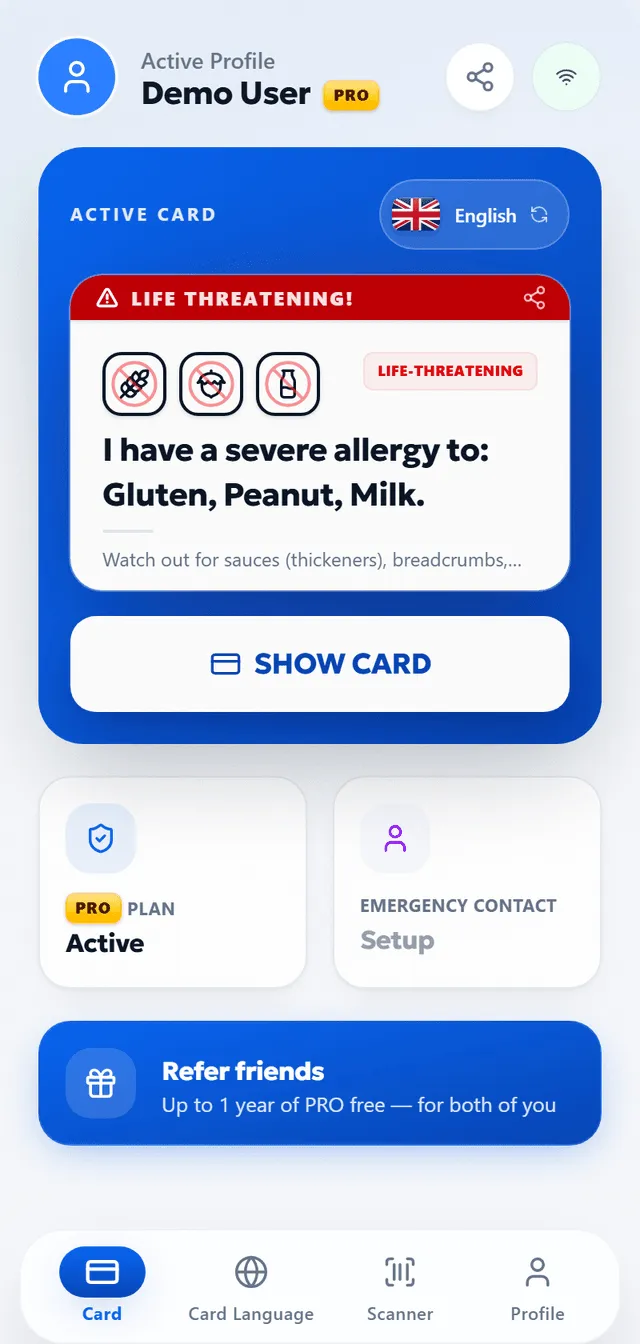
Show your phone at the table and the kitchen reads your peanut allergy in their working language — including Japanese, Chinese, Thai and Arabic, plus 20 more. The card names peanuts and cross-contact risk clearly, covers all 14 EU-regulated allergens if you react to more than one, and lets you set severity so staff grasp how serious it is. Because the card is stored on-device, it opens on a night train, in a rural guesthouse or on a plane with no signal. You can also add an emergency (ICE) contact right on the card, so help is one glance away.
Scan before you eat
At a supermarket or convenience store, scan a product barcode and TrustBite checks it against Open Food Facts data, returning a simple green, yellow or red verdict for peanuts and traces. At the restaurant, point the camera at the menu or a packaged snack and the AI analysis flags likely peanut sources and ambiguous items to double-check with staff. Start free with unlimited barcode scanning; optional Pro lifts the daily limits on the AI menu analysis for longer or more remote trips where you check dozens of labels a day.
FAQ
Which languages does the peanut allergy card cover?
24, including Japanese, Chinese, Thai and Arabic alongside major European languages, so kitchens across most travel destinations can read your peanut allergy in a language they use daily.
Does the card work without internet?
Yes. Your allergen card is stored on your device and opens fully offline — useful on flights, trains and in areas with no signal. Barcode and AI menu scanning need a connection.
Can it catch hidden peanuts like peanut oil or satay?
The card clearly states your peanut allergy and cross-contact risk for staff, and barcode plus AI menu scanning flag likely peanut sources such as satay sauces, groundnut oil and baked goods. Always confirm verbally with the kitchen.
Is TrustBite free, and is it a medical device?
TrustBite is free to start, with unlimited barcode scanning included and an optional Pro upgrade that lifts the daily limits on the AI menu analysis. It is an aid to communication, not a medical device, and does not diagnose or treat allergies.
TrustBite is a communication aid, not a medical device. It does not diagnose, treat or prevent allergic reactions and cannot guarantee any food is free from peanuts or other allergens. Always confirm ingredients and cross-contact directly with restaurant staff, carry your prescribed medication (such as an adrenaline auto-injector and antihistamines), and if you experience a severe reaction call your local emergency services immediately.