Travel with a soy allergy
Your Soy Allergy Travel Card, Read by Staff in Their Own Language
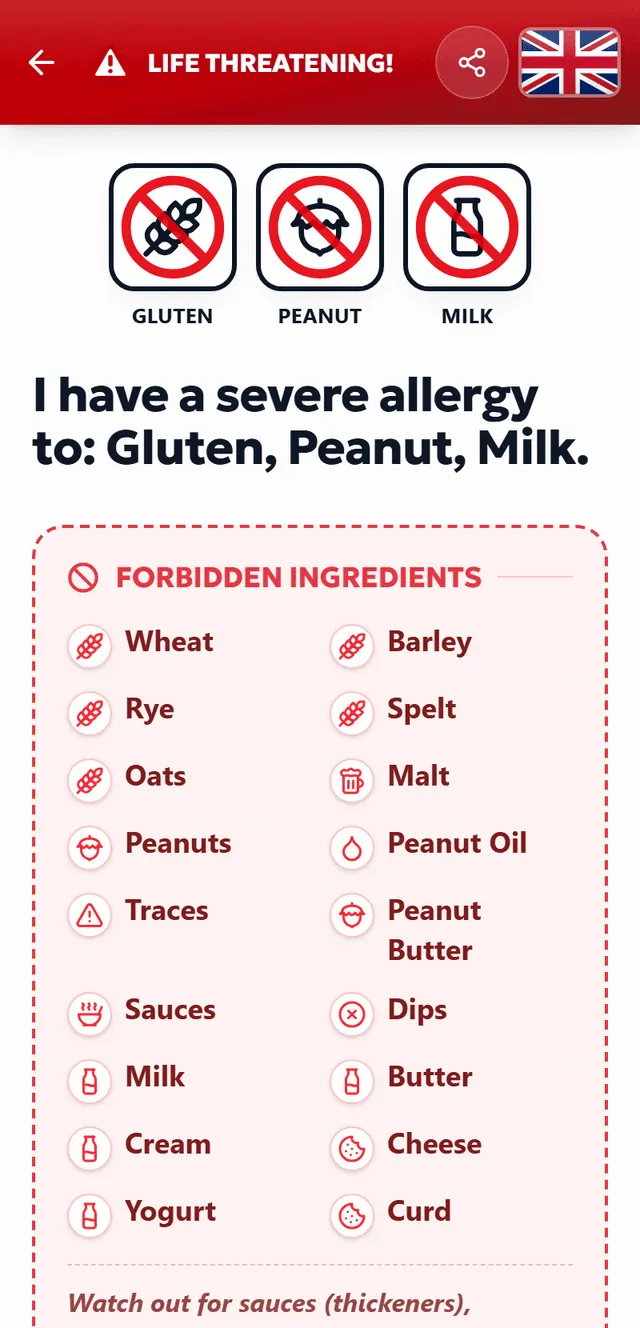
Soy hides in soy sauce, tofu, edamame, miso and even chocolate. When you are travelling and cannot explain your allergy, TrustBite shows waiters a clear soy allergy card in their language, working offline, plus barcode and AI menu scanning to catch hidden soy before you order.
Create & print your card →
Where soy hides when you travel
Soy is one of the 14 EU-regulated allergens and it is everywhere in East Asian cooking. Obvious sources are soy sauce (shoyu), tofu, tempeh, edamame, miso and natto, but the risky ones are hidden: soy lecithin in chocolate, spreads and baked goods; textured or hydrolysed soy protein bulking out sausages, burgers and vegetarian dishes; and soybean oil used for deep-frying. Dishes to question include Japanese teriyaki, ramen and gyoza, Chinese stir-fries and hoisin sauce, Korean bulgogi and gochujang, Thai and Vietnamese dipping sauces, and Indonesian tempeh and kecap manis. Even Western processed food, bread, chocolate and margarine often carries a soy warning on the label.
A card staff actually understand
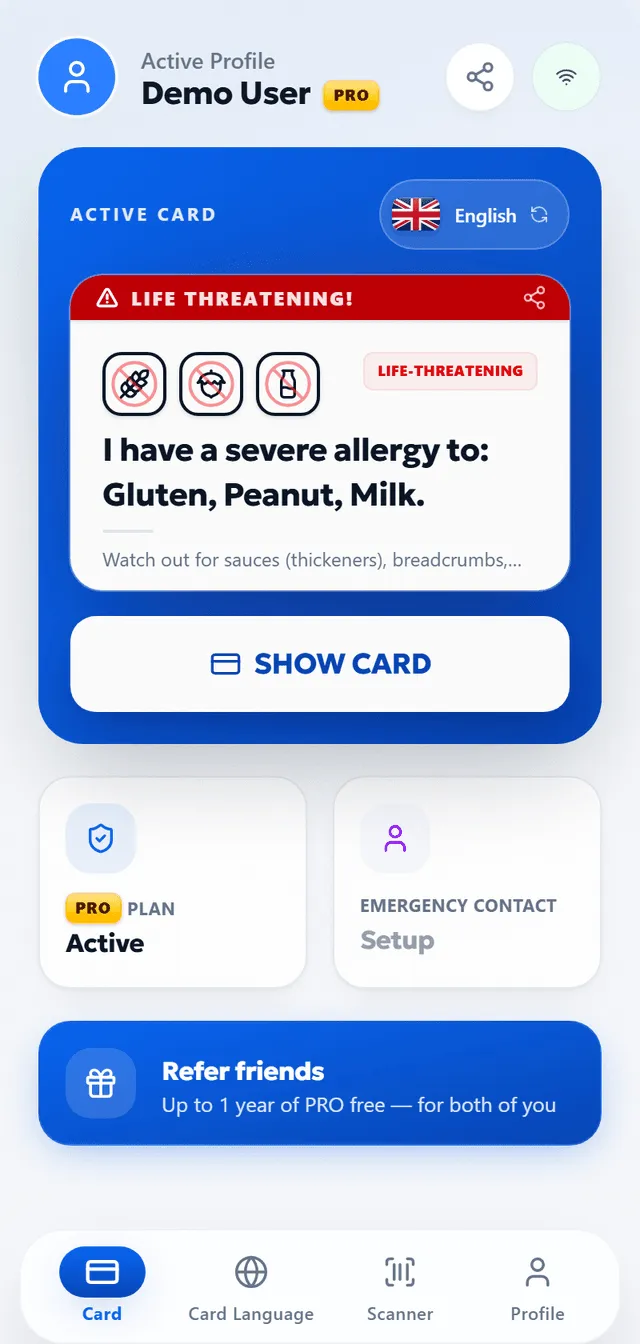
A phrase you rehearsed rarely survives a busy kitchen or a language you do not speak. TrustBite turns your soy allergy into a card the waiter reads in their own language, one of 24 including Japanese, Chinese, Thai and Arabic, spelling out that you must avoid soy sauce, tofu, miso, edamame and soy lecithin, and asking them to check the oil and sauces. You can list your severity level and add your emergency (ICE) contact right on the card, so staff and companions know how serious it is.
Scan for soy, even with no signal
The card works fully offline, so a countryside guesthouse or an aeroplane with no data is no problem. In a supermarket, scan a barcode and TrustBite checks Open Food Facts to give you a green, yellow or red verdict on soy. Facing an untranslated menu, use AI photo and menu analysis to flag dishes that likely contain soy. It is free to use with unlimited barcode scanning, and an optional Pro upgrade lifts the daily limits on the full AI analysis when you need it most.
FAQ
Does the soy allergy card work without internet?
Yes. The allergen card is stored on your phone and displays fully offline, so you can show staff your soy allergy even with no signal, no roaming and no Wi-Fi. Barcode and AI scanning need a connection, but the card itself never does.
Which languages does the card cover?
TrustBite shows your soy allergy in 24 languages, including Japanese, Chinese, Thai and Arabic, which is exactly where soy appears most, from soy sauce and miso to tofu and edamame. You show, staff read, in their own language.
Can it catch hidden soy like lecithin or soybean oil?
The card names common hidden sources so staff can check, and the barcode scanner reads packaged-food labels for soy. AI menu and photo analysis flags likely soy in dishes. Always confirm with staff, as recipes and processing vary.
Is TrustBite a medical device?
No. TrustBite is a communication and information aid to help you flag your soy allergy while travelling. It is not a medical device and does not diagnose or treat. Always verify ingredients with restaurant staff and carry any medication your doctor prescribed.
TrustBite is a communication and information aid, not a medical device. It does not diagnose, treat or prevent allergic reactions and cannot guarantee any food is soy-free. Always verify ingredients and preparation directly with restaurant and kitchen staff, read product labels, and carry any medication prescribed by your doctor, such as antihistamines or an adrenaline auto-injector. If you experience a severe allergic reaction, use your emergency medication and call your local emergency services immediately.