Travel with confidence
The shellfish allergy travel card that speaks the local language
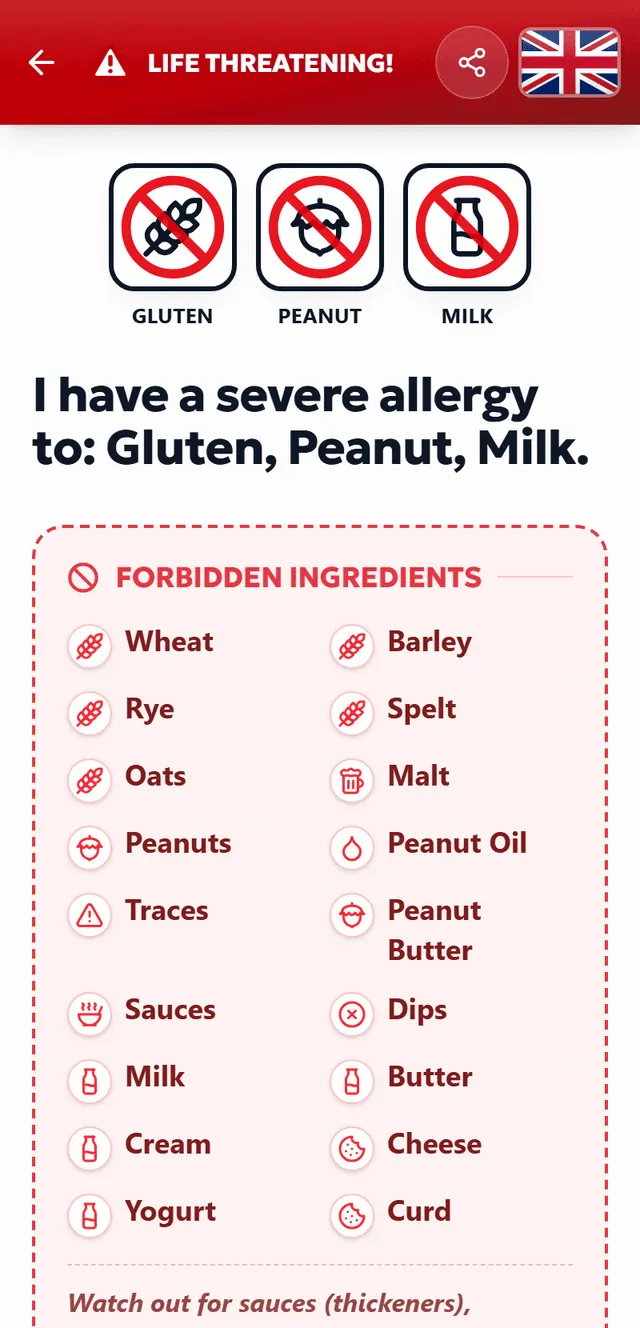
Travelling with a shellfish allergy means hidden shrimp paste in a Thai curry, oyster sauce in a stir-fry, and shared grills you never see. TrustBite puts your specific shellfish allergy on a clear card that restaurant staff read in their own language — offline, in 24 languages including Japanese, Chinese, Thai and Arabic. Add a barcode scanner and AI menu scanning, and you check food before it reaches the table.
Create & print your card →
Where shellfish hides on a menu abroad
Crustaceans (shrimp, prawn, crab, lobster, langoustine) and molluscs (mussel, clam, oyster, squid, octopus, scallop) turn up far beyond the obvious seafood platter. Watch for shrimp paste (kapi, belacan, bagoong) in Thai, Malaysian and Filipino curries, som tam and sambal; oyster sauce in Chinese and Cantonese stir-fries, chow mein and gai lan; fish or seafood stock behind paella, bouillabaisse, laksa, tom yum, dashi and miso soups; Worcestershire sauce and Caesar dressing (anchovy-based, but often near shared seafood prep); XO sauce (dried shrimp and scallop); surimi 'crab sticks' in sushi and salads; and squid ink in pasta and rice. TrustBite's card lists all 14 EU-regulated allergens and lets you flag crustaceans and molluscs separately with a severity level, so staff see exactly what you cannot eat.
Cross-contact is the risk you can't read on a menu
A dish with no shellfish ingredient can still reach you contaminated. Shared grills and flat-tops sear prawns and steaks on the same surface; the same fryer cooks battered shrimp, calamari and your chips; one pair of tongs and one wok move between seafood and vegetable dishes; and buffet serving spoons get swapped between trays. At a teppanyaki table, seafood and non-seafood are cooked side by side. TrustBite's card includes a plain line asking staff to use a clean pan, clean utensils and fresh oil — phrased in their language — so you can raise cross-contact without a translation struggle. Ask specifically whether the fryer and grill are shared before you order.
How TrustBite works on the road
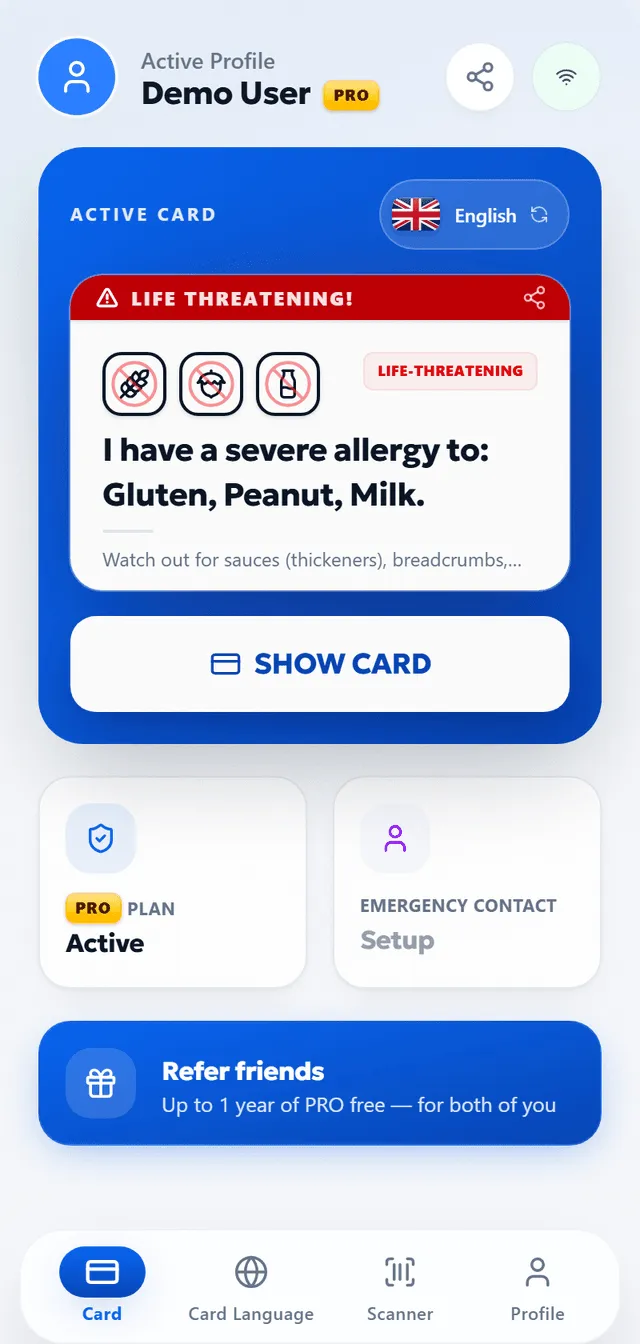
Build your profile once: choose crustaceans, molluscs and any other allergens, set severity, and add an emergency (ICE) contact. Show the card and staff read your allergy in their own language — it works fully offline, so no signal on a mountain pass or rural ferry is fine. In a shop, scan a product barcode against Open Food Facts for a green, yellow or red verdict. Faced with a wall of untranslated menu text, use AI menu scanning and AI photo analysis to surface likely shellfish sources for a closer question. TrustBite is free to use with unlimited barcode scanning; optional Pro lifts the daily limits on the AI checks.
FAQ
Does the shellfish allergy card work without internet?
Yes. Once your profile is set up, the allergen card displays fully offline in all 24 languages, so you can show it on flights, in rural areas, or anywhere with no signal. Barcode and AI menu scanning need a connection, but the card itself does not.
Can I show that I react to both crustaceans and molluscs?
Yes. TrustBite covers all 14 EU-regulated allergens and lists crustaceans and molluscs as separate items, each with a severity level. You can flag one or both, so staff see whether you avoid shrimp and crab, mussels and squid, or everything from the sea.
Which languages does the card use?
24, including Japanese, Chinese, Thai, Arabic, French, Spanish, Italian, German and more. You show the card and staff read your shellfish allergy in their own language, which removes the guesswork of explaining it verbally.
Can it catch hidden shellfish like shrimp paste or oyster sauce?
It helps you spot them. AI menu and photo scanning flag likely shellfish sources such as shrimp paste, oyster sauce, fish stock and surimi so you can ask the right question, and the barcode scanner checks packaged products. Always confirm with staff before eating — the app is an aid, not a guarantee.
TrustBite is an aid to communication and awareness, not a medical device, and does not diagnose, treat or prevent allergic reactions. It cannot guarantee any food is free from shellfish or from cross-contact. Always verify with restaurant staff before eating, carry your prescribed medication (such as an adrenaline auto-injector and antihistamines), and if you experience a severe reaction call your local emergency services immediately. Follow the advice of your doctor or allergy specialist.