Sesame allergy · Travel safer abroad
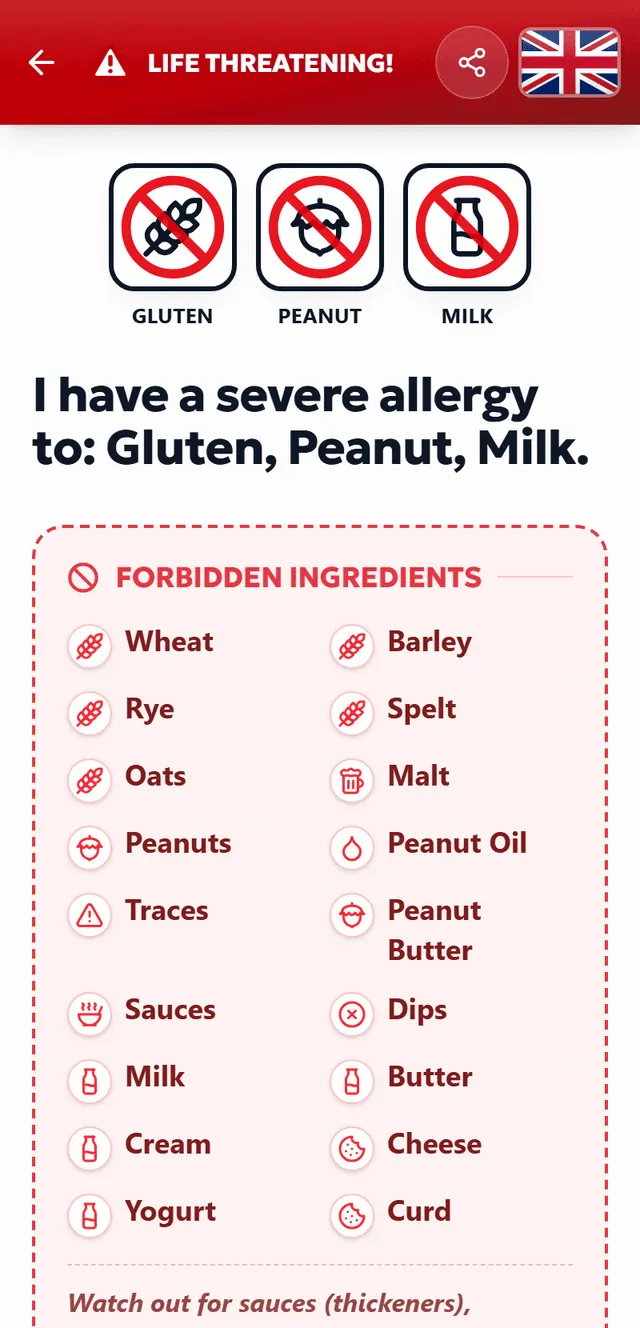
Your sesame allergy travel card, in the waiter's language
Sesame is one of the hardest allergens to dodge on the road — it hides in tahini, hummus, halva, sesame oil and bread toppings, and it's everywhere in Middle Eastern and East Asian cooking. TrustBite puts your sesame allergy on a clear card that restaurant staff read in their own language, works offline when you have no signal, and adds barcode and AI menu scanning so you can check before you order.
Create & print your card →
Where sesame hides when you're travelling
Sesame rarely shows up as the word 'sesame.' Watch for tahini (the sesame paste in hummus, baba ganoush and many dips), halva, and sesame oil used for finishing or frying across Chinese, Korean, Japanese and Thai kitchens. Bread and bagels get sesame toppings, za'atar spice blends contain sesame, and burger buns, breadsticks, crackers and Turkish simit are common culprits. Gomashio (sesame salt), goma dressing, dukkah and Middle Eastern sweets like sesame snaps often carry no obvious label. TrustBite's card spells these hidden sources out in the local language so staff know exactly what to check in the kitchen.
A card staff actually understand — in 24 languages, offline
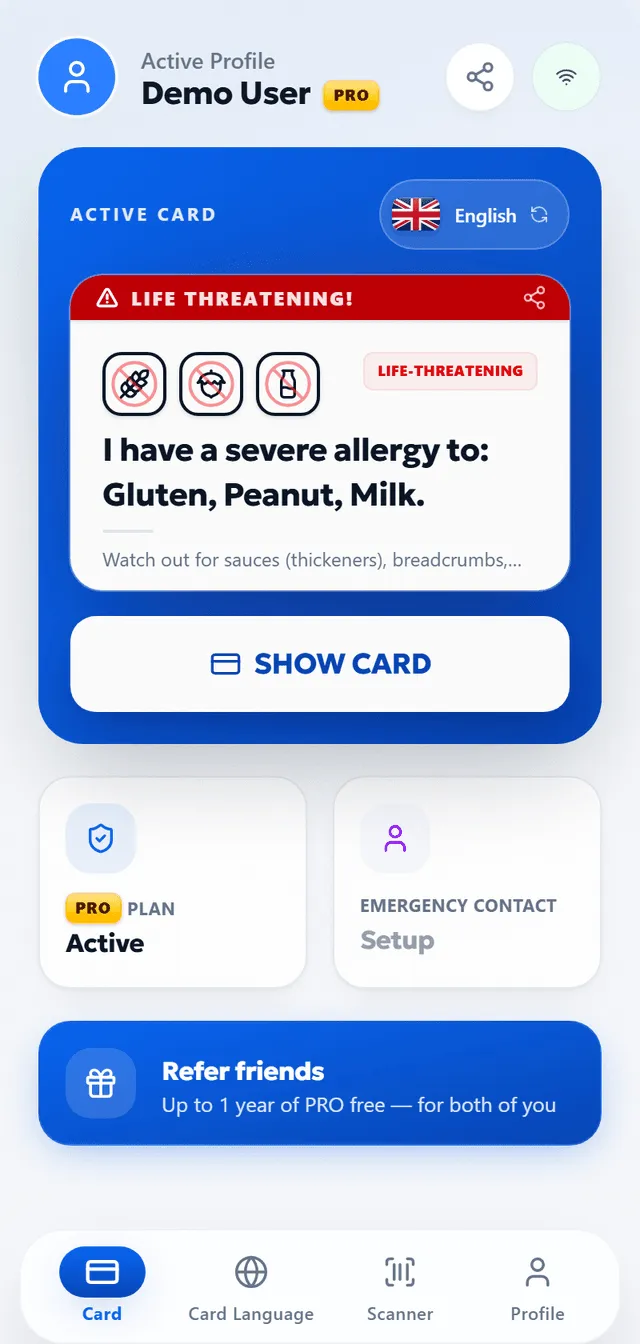
You show TrustBite's allergen card and the kitchen reads a clear sesame warning in their own language — including Japanese, Chinese, Thai and Arabic, the cuisines where sesame is most common. It covers all 14 EU-regulated allergens with severity levels, so you flag sesame as your priority. The card works fully offline, so a rural guesthouse or a market stall with no signal is no obstacle, and you can add an emergency (ICE) contact right on the card in case staff need to reach someone fast.
Scan before you order: barcode and AI menu checks
At a supermarket or convenience store abroad, scan a product barcode and TrustBite checks it against Open Food Facts data, returning a simple green, yellow or red verdict for your profile. Facing a menu you can't read? Point the AI menu scanner at it, or photograph a dish, and TrustBite flags likely sesame-containing items so you can ask smarter questions. It's free to start, with unlimited barcode scanning included and an optional Pro upgrade that lifts the daily limits on the AI analysis.
FAQ
Does the card work without internet while I'm abroad?
Yes. Your allergen card displays fully offline in all 24 languages, so you can show it to staff even with no signal or roaming. Barcode and AI scanning need a connection, but the card itself never does.
Which languages are best for a sesame allergy?
TrustBite covers 24 languages including Japanese, Chinese, Thai and Arabic — the cuisines where sesame is most common through tahini, sesame oil, gomashio and za'atar. Just pick the local language before you hand over your phone.
Can it catch hidden sesame like tahini or sesame oil?
The card names common hidden sources so staff know what to check, and the AI menu scanner flags likely sesame-containing dishes. Always confirm with the kitchen — cross-contamination and undeclared oils can't be guaranteed by any app.
Is TrustBite free, and is it a medical device?
TrustBite is free to start, with unlimited barcode scanning included and optional Pro lifting the daily limits on the AI analyses. It is a communication and information aid, not a medical device, and does not diagnose or treat allergies. Always verify with staff and carry your prescribed medication.
TrustBite is a communication and information aid, not a medical device. It does not diagnose, treat or prevent allergic reactions and cannot guarantee any food is free of sesame or other allergens. Always confirm ingredients and cross-contamination risks directly with restaurant staff, carry your prescribed medication (such as antihistamines or an adrenaline auto-injector), and call your local emergency services immediately if you experience a severe reaction.