Travel with a fish allergy
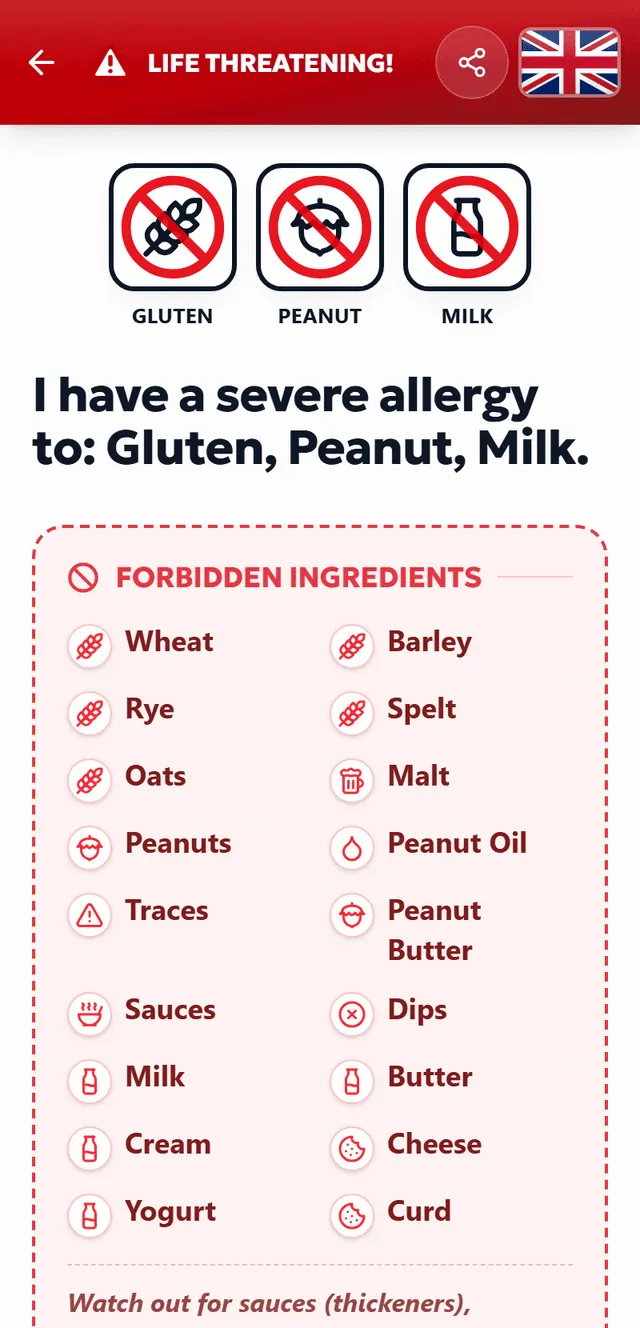
Your fish allergy travel card, read by staff in their own language
Fish hides in dashi broth, fish sauce, Worcestershire and surimi — and menus abroad rarely spell it out. TrustBite puts your fish allergy on a clear card that restaurant staff read in their own language, works offline, and lets you scan barcodes and menus before you order.
Create & print your card →
Where fish hides when you travel
Fish is one of the 14 EU-regulated allergens, but it turns up far beyond the obvious grilled fillet or sushi. In Southeast Asia, fish sauce (nam pla, nuoc mam) is a base seasoning in pad thai, papaya salad, curries and dipping sauces. Japanese dashi — a stock made from bonito (dried fish) flakes — flavours miso soup, ramen broth, tamagoyaki and countless simmered dishes. Watch for Worcestershire sauce (contains anchovy) in marinades, Caesar dressing and Bloody Marys; surimi imitation crab in California rolls and salads; anchovy in Caesar salad, puttanesca, tapenade and many pizza toppings; and fish-based stocks in paella and bouillabaisse. Even 'vegetarian' kimchi or oyster-style sauces can carry fish. TrustBite's card names your specific allergen so staff know exactly what to check in the kitchen.
One card, 24 languages, works offline
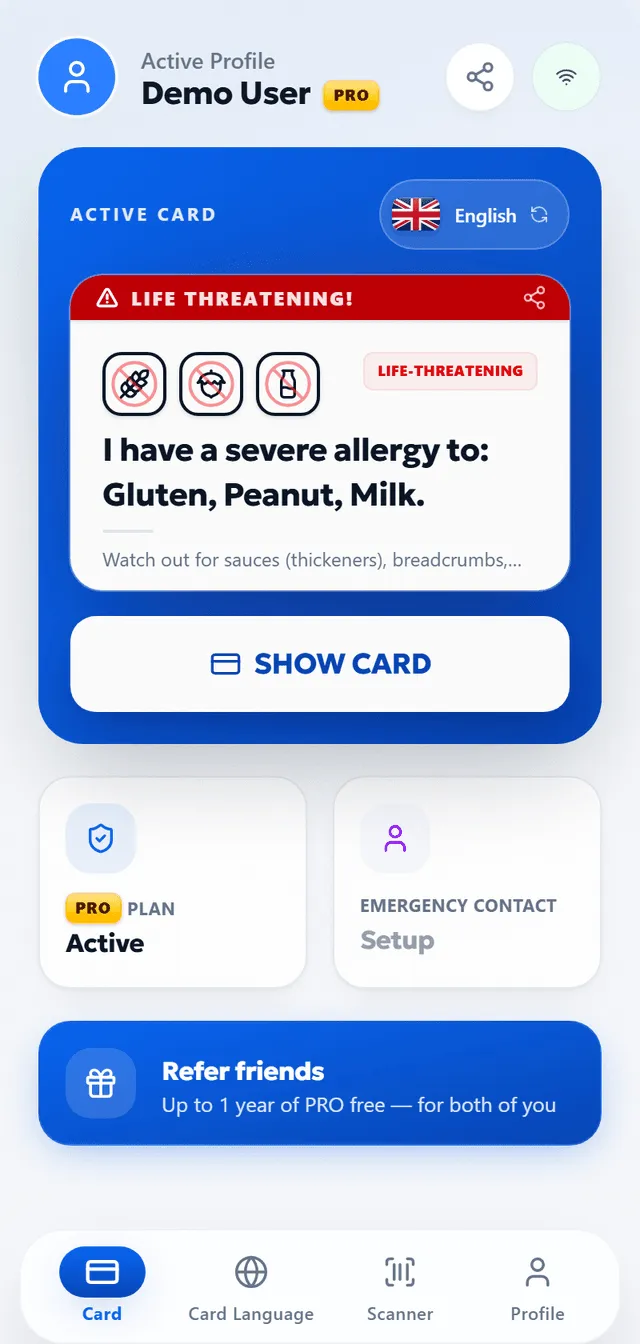
Language is the real barrier abroad. TrustBite shows staff a clear allergen card in 24 languages — including Japanese, Chinese, Thai and Arabic — stating that you must avoid fish and what that means for the kitchen. The card is stored on your phone and works fully offline, so it's ready in a rural trattoria, a night-market stall or a flight with no signal. You can add your emergency (ICE) contact directly on the card, and set severity levels so staff understand how serious a reaction could be. Hand over your phone, and the person cooking your food reads your allergy in their own language — no translation app, no charades.
Scan barcodes and menus before you order
Beyond the card, TrustBite helps you vet food yourself. The barcode scanner checks packaged products against the Open Food Facts database and gives a simple green, yellow or red verdict — handy for supermarket snacks and long train journeys. Point the AI menu scanner at a printed menu, or the AI photo analysis at a dish, to flag likely fish sources before you commit. It covers all 14 EU-regulated allergens, so if you also react to shellfish or molluscs you can track those too. TrustBite is free to download with unlimited barcode scanning; optional Pro lifts the daily limits on the AI features.
FAQ
Which languages does the fish allergy card support?
The card displays in 24 languages, including Japanese, Chinese, Thai and Arabic, so staff can read your fish allergy in their own language. It also works fully offline once installed.
Does the card work without internet?
Yes. Your allergen card is stored on your phone and displays offline, so it's ready in remote restaurants, markets or on flights with no signal. Barcode and AI scanning need a connection.
What hidden sources of fish should I watch for abroad?
Common culprits include fish sauce (pad thai, curries), Japanese dashi broth (miso soup, ramen), Worcestershire and Caesar dressing (anchovy), surimi imitation crab, and fish stock in paella or bouillabaisse. Always confirm with staff.
Is TrustBite free, and does it cover other allergens?
TrustBite is free to download and covers all 14 EU-regulated allergens with severity levels. Barcode scanning stays free and unlimited; optional Pro lifts the daily limits on the AI photo and menu analysis.
TrustBite is an aid to communication, not a medical device, and does not diagnose, treat or guarantee the safety of any food. Always confirm ingredients and preparation directly with restaurant staff, carry your prescribed allergy medication (including any adrenaline auto-injector), and call your local emergency services immediately if you experience a severe reaction.