Travel with food allergies
Allergy Card for South Korea — In Korean, Offline
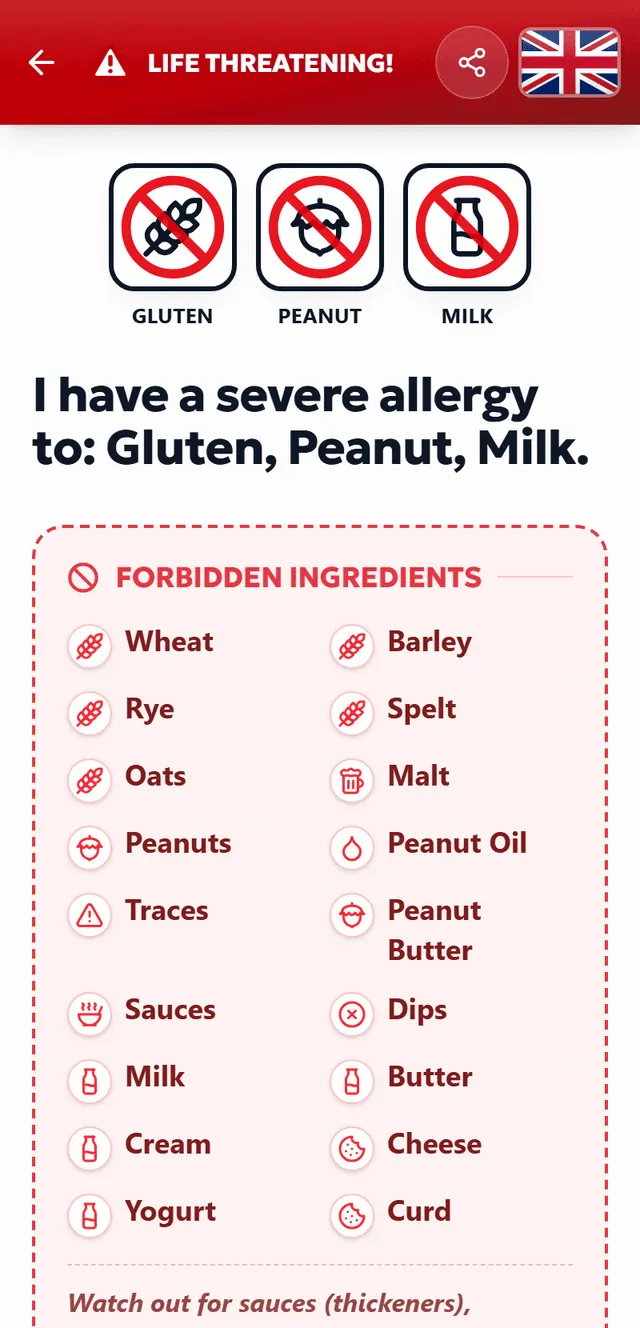
Korean food is built on soy, wheat, fish stock and sesame — often where you least expect it. TrustBite shows restaurant staff a clear allergy card written in Korean (one of 24 languages), works offline, and adds barcode and AI menu scanning so you can spot hidden allergens before you order. It is a free aid to help you communicate, not a medical device.
Create & print your card →
Why a printed card isn't enough in Korea
A single laminated card names your allergens, but it can't keep up with a Korean menu. Almost every savoury dish starts with a base you can't see: myeolchi yuksu (anchovy stock), aekjeot (fish sauce) and saeujeot (salted shrimp) hide in kimchi, soups and even vegetable banchan side dishes. Soy sauce (ganjang) and gochujang paste usually contain wheat as well as soy, so 'no soy' and 'no gluten' are harder than they sound. TrustBite carries your full profile for all 14 EU-regulated allergens with severity levels, shows it to staff in fluent Korean, and lets you scan a barcode or photograph a menu on the spot — one tool instead of one printout per country.
Korean dishes and ingredients to watch
Soy and wheat: soy sauce, doenjang and gochujang appear in japchae, bulgogi marinades, tteokbokki and most stews; Korean fried chicken and twigim (fritters) are wheat-battered. Fish and shellfish: kimchi is typically made with fish sauce and shrimp, while sundubu-jjigae, haemul pajeon (seafood pancake) and jjamppong are shellfish-heavy. Egg: gimbap, bibimbap and many rice dishes are topped with egg. Sesame: chamgireum (sesame oil) and sesame seeds garnish namul vegetables, bibimbap and countless banchan. Perilla leaf (kkaennip) is common too. Peanut and tree nut turn up in gangjeong snacks and some desserts. TrustBite spells each of these out in Korean so staff understand exactly what to avoid.
How TrustBite works on the ground
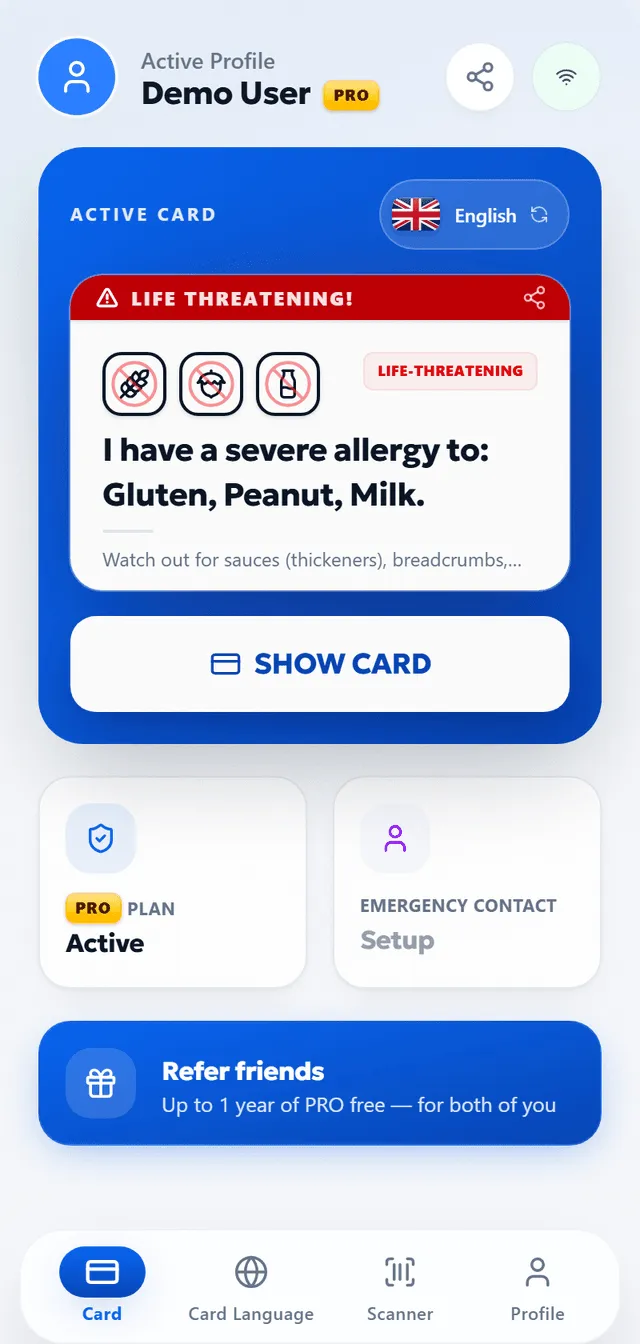
Show the card: open your allergen card in Korean and hand your phone to the server or kitchen — no signal needed, it works fully offline once loaded. Scan a barcode: at a convenience store (CU, GS25, 7-Eleven) point the scanner at a packaged product and TrustBite reads Open Food Facts data to give you a simple green, yellow or red verdict. Read the menu: use AI photo and menu analysis to flag likely allergens in a dish before you order. Add an ICE emergency contact to the card, scan barcodes free and unlimited, and lift the daily limits on the AI features with optional Pro. Always confirm with staff — cross-contamination and recipe changes are common.
FAQ
Does the allergy card really display in Korean?
Yes. Korean is one of TrustBite's 24 card languages. You choose your allergens once and the card shows them to restaurant staff in clear Korean, alongside 23 other languages including Japanese, Chinese, Thai and Arabic — useful across the rest of your trip.
Will the card work without internet or a SIM in Korea?
Yes. Once the app is loaded, the allergen card works fully offline, so you can show it to staff even without mobile data or Wi‑Fi. Barcode scanning, AI photo and AI menu analysis need a connection, so use them when you're online.
Can it help with hidden fish sauce and soy in Korean food?
It helps you communicate and check. The Korean card clearly states allergens like fish, shellfish, soy and gluten so staff can tell you if a dish, broth or kimchi contains them, and the scanner and menu analysis flag likely allergens. Because recipes vary, always confirm directly with staff.
Is TrustBite free, and is it a medical device?
The core app — including the Korean allergen card, barcode scanning and all 14 allergens — is free. Barcode scanning stays free and unlimited; optional Pro lifts the daily limits on the AI features. TrustBite is a communication aid, not a medical device, and does not diagnose or guarantee safety.
TrustBite is a communication aid, not a medical device. It does not diagnose allergies, guarantee that any food is safe, or replace professional medical advice. Recipes, ingredients and cross-contamination risks vary between kitchens, so always verify every dish directly with restaurant staff before eating. If you experience a severe allergic reaction, use your emergency medication and call local emergency services immediately (dial 119 in South Korea).