For travellers with food allergies
Your allergy card for the Netherlands — in Dutch, offline
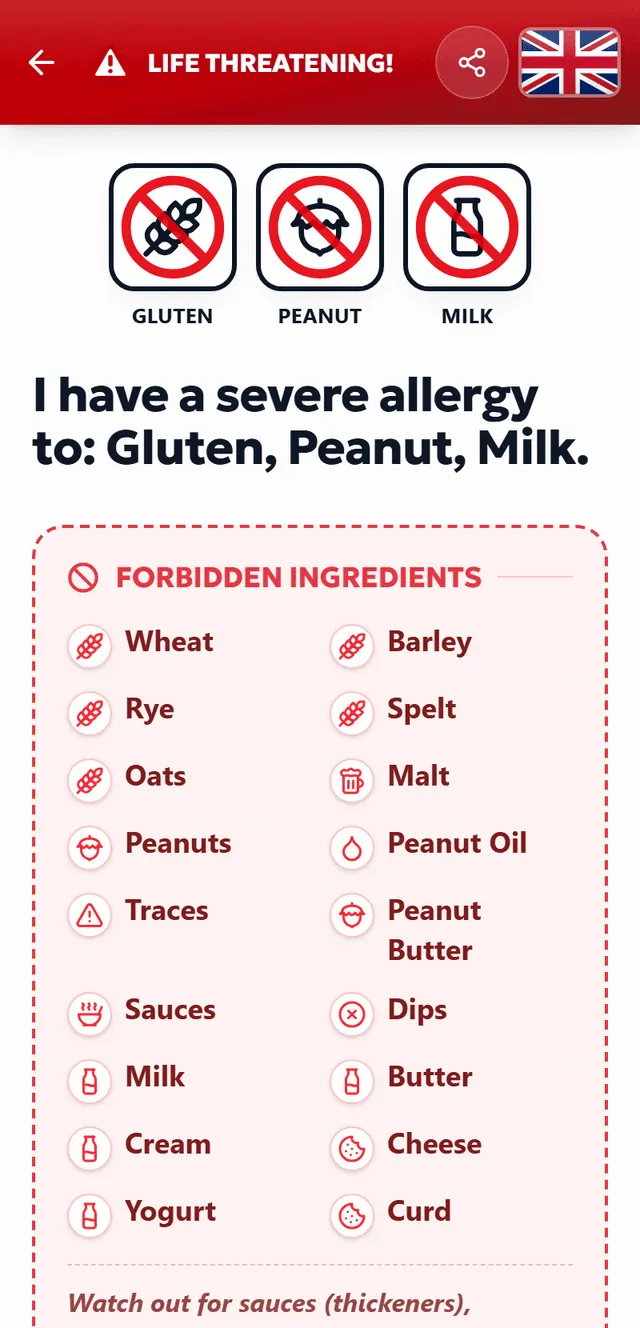
From a bitterbal at the bar to satésaus on your fries, Dutch snacks hide gluten, peanuts, milk and more. TrustBite shows Amsterdam or Rotterdam restaurant staff a clear allergy card in Dutch — one of 24 languages — that works even without signal. Scan barcodes and menus on the go. Free on iOS and Android.
Create & print your card →
Dutch allergen traps worth knowing before you order
Dutch snackbar and café food is full of surprises for allergy travellers. Peanut is everywhere: pindasaus (satésaus) drenches patatje oorlog and saté, and pindakaas turns up at breakfast. Gluten hides in the crumbed coating of bitterballen, kroketten, frikandel, kibbeling and lekkerbek, and in pannenkoeken, poffertjes, stroopwafels, speculaas and ontbijtkoek. Milk lurks in the ragout inside bitterballen and in the kaassoufflé. Fish means raw haring and battered vis, while Indo-Dutch dishes like nasi, bami and rijsttafel bring soy (ketjap), egg, peanut and shellfish via kroepoek (prawn crackers). Deep-fryers in many snackbars share one oil bath, so cross-contact is common. Knowing the Dutch words — pinda, noten, gluten, melk, ei, vis, schaaldieren, soja — helps, but a written card removes the guesswork.
Why a Dutch allergy card beats a printed one
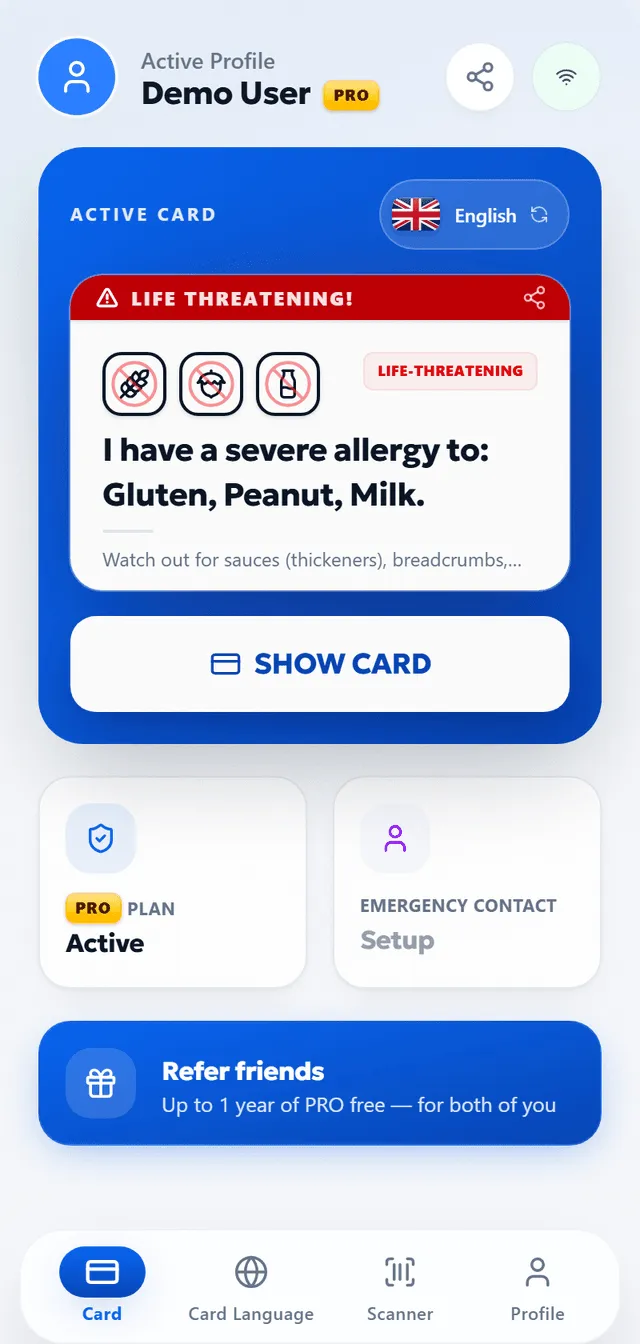
A single printed card only speaks one language and can't keep up when you cross a border on the same trip. TrustBite carries your exact profile across all 14 EU-regulated allergens — gluten, peanut, tree nut, milk, egg, fish, shellfish, soy, sesame, mustard, celery, sulphite, lupin and mollusc — with severity levels, so staff see what is serious versus what you simply avoid. Switch the card to Dutch to show a kitchen in Utrecht, then to German, French, Italian, Japanese, Chinese, Thai, Arabic or any of 24 languages for your next stop. The card renders fully offline, so a basement eatery with no signal is no problem. You can add an emergency (ICE) contact right on the card too.
Scan barcodes and menus while you travel
Beyond the card, TrustBite helps you decide before you eat. Point the barcode scanner at a supermarket product from Albert Heijn or Jumbo and get a clear green, yellow or red verdict powered by the Open Food Facts database. Photograph a dish or a whole Dutch menu and let the AI flag likely allergens against your profile — handy when a menu lists only 'kroket' or 'kaassoufflé' with no detail. TrustBite is free to use with unlimited barcode scanning; optional Pro lifts the daily limits on the full AI photo and menu analysis. It's a practical travel companion for eating out across the Netherlands with more confidence.
FAQ
Does the Dutch allergy card work without internet?
Yes. Once TrustBite is installed, your allergy card renders fully offline in Dutch and all 24 languages. You can show it to restaurant staff in a basement café or a rural spot with no mobile signal — no connection needed to display your allergens and severity levels.
Which allergens does the card cover for the Netherlands?
All 14 EU-regulated allergens: gluten, peanut, tree nut, milk, egg, fish, shellfish (crustaceans), soy, sesame, mustard, celery, sulphite, lupin and mollusc. This matches the allergens Dutch venues are legally required to declare, and you can set a severity level for each so staff understand what is critical.
Is TrustBite free, and does it work on iPhone and Android?
Yes. TrustBite is free on both iOS and Android, including the multilingual allergy card, barcode scanning and a limited number of AI scans. Barcode scanning stays free and unlimited; optional Pro lifts the daily limits on the AI photo and menu analysis. No purchase is needed to use the core Dutch allergy card.
How does it handle Dutch dishes like bitterballen or satésaus?
Use the AI menu or photo scan to flag likely allergens in dishes such as bitterballen (gluten, milk, beef), satésaus and patatje oorlog (peanut), or kibbeling (gluten, fish). Then show your Dutch card so staff can confirm the recipe. TrustBite is an aid — always verify directly with the kitchen, as recipes and shared fryers vary.
TrustBite is an aid to communication, not a medical device, and does not diagnose, treat or guarantee your safety. Allergen information can be incomplete or wrong, and shared fryers and equipment mean cross-contact is always possible — always verify your allergies directly with restaurant staff before eating. If you experience a severe allergic reaction, use your prescribed medication and call local emergency services immediately (112 in the Netherlands).