Travel with food allergies
Your allergy card for Morocco, in Arabic
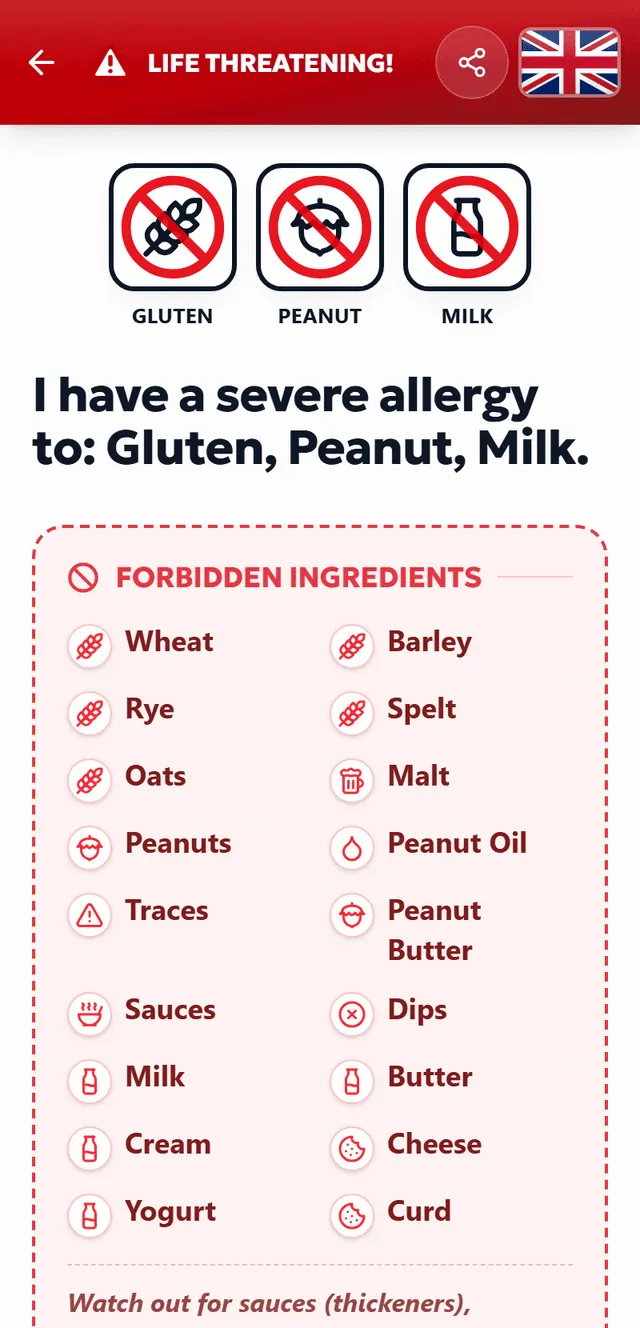
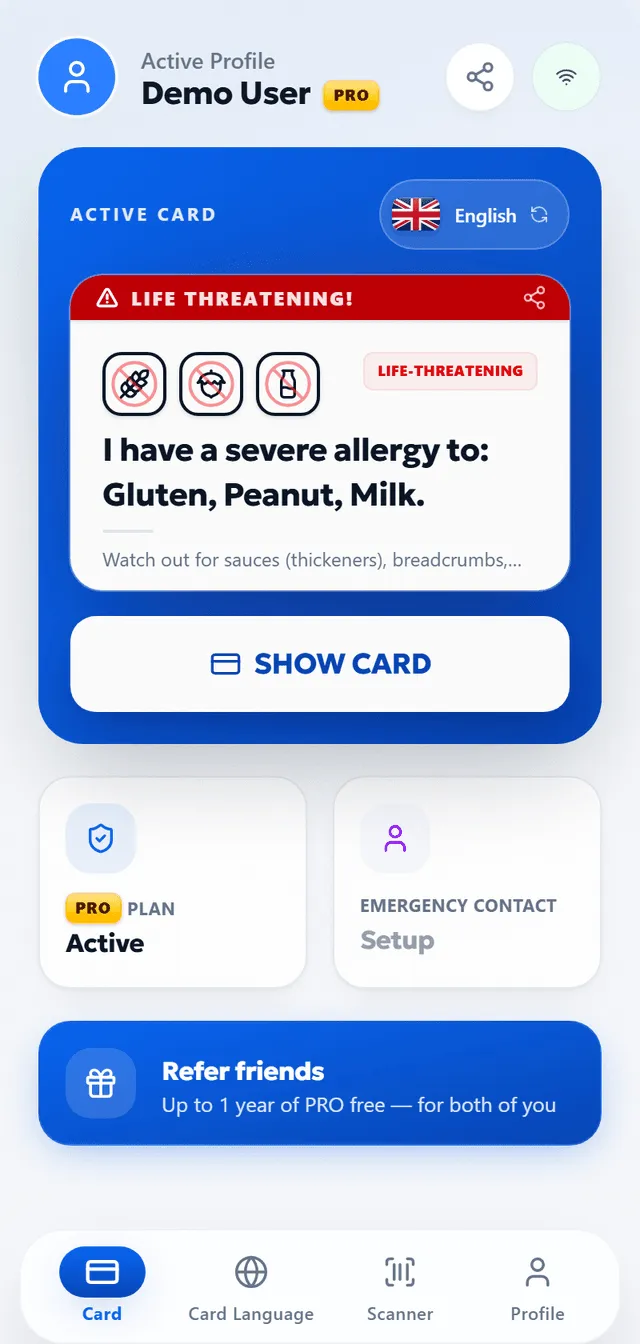
From the almond-topped tagines of Marrakech to the argan oil in a Souss village kitchen, Moroccan food hides allergens in places a phrasebook won't catch. TrustBite shows restaurant staff a clear allergy card in Arabic - one of 24 languages - and it works offline in the medina where there's no signal. Scan a packaged snack's barcode or photograph a menu for a green, yellow or red read. Free on iOS and Android.
Create & print your card →
The allergen traps in Moroccan cooking
Moroccan kitchens are generous with nuts, and often silently. The classic beef-or-lamb-with-prunes tagine is frequently crowned with fried almonds, and pastilla (bastilla) pie is dusted with ground almonds and built on egg and warqa pastry (gluten). Amlou, the moreish breakfast dip, is almond and argan butter - and argan oil, cold-pressed from the argan nut, turns up in salads and drizzled over dishes without warning. Sweets are a minefield: chebakia is fried and coated in sesame and honey, briouats and kaab el ghazal (gazelle horns) are almond-stuffed, and sellou is a dense nut-and-sesame mix. Add spice blends like ras el hanout (variable, undocumented ingredients), egg and celery in harira soup, gluten in msemen and harcha breads, and abundant fish and shellfish on the Atlantic coast at Essaouira and Casablanca. Cross-contact is common in open, shared kitchens.
Why an Arabic card beats a printed slip
Food allergies are still little understood in much of Morocco, and Darija (Moroccan Arabic) is the working language of most kitchens. A single printed card in one language, easily lost or coffee-stained, only covers one situation. TrustBite carries all 14 EU-regulated allergens - gluten, peanut, tree nut, milk, egg, fish, shellfish, soy, sesame, mustard, celery, sulphite, lupin and mollusc - with severity levels, so you can flag a life-threatening tree-nut allergy differently from a mild intolerance. You can add your emergency (ICE) contact right on the card. And because you carry 24 languages in one app, the same tool works when you connect through Paris, Madrid or Doha - not just in Morocco.
Scan, snap and check - even offline
The card renders fully offline, so a dead SIM or a basement riad with no Wi-Fi doesn't leave you stranded. When you do have a connection, scan a barcode in a Marjane or Carrefour supermarket - TrustBite reads Open Food Facts and returns a simple green, yellow or red verdict against your profile. Point the camera at a Moroccan menu or a plate of food and the AI photo and menu analysis flags likely allergens for you to confirm. TrustBite is free, including unlimited barcode scanning; an optional Pro upgrade lifts the daily limits on the AI analysis. It's built for real travel, not a one-country souvenir.
FAQ
Does the TrustBite allergy card really work in Arabic?
Yes. Arabic is one of TrustBite's 24 card languages. You show staff a clear card written in Arabic that names your allergens, so kitchen and waiting staff understand exactly what you must avoid - without you needing to speak Darija.
What Moroccan dishes should I watch out for with a nut allergy?
Be cautious with prune tagines (often topped with fried almonds), pastilla, amlou, anything cooked in argan oil, and most pastries - chebakia, briouats, sellou and gazelle horns. Everyday grilled meats, plain couscous and salads are more often nut-free, but always confirm with staff, as nuts are sometimes added as a last-minute garnish.
Will the card work without internet in Morocco?
Yes. The allergy card is stored on your phone and renders fully offline, so it works in the medina, in rural areas and anywhere your mobile signal drops. Barcode scanning and AI menu analysis need a connection, but showing your card never does.
Is TrustBite free, and is it a medical device?
TrustBite is free to download on iOS and Android with unlimited barcode scanning, and an optional Pro upgrade lifts the daily limits on the AI analysis. It is a communication and information aid, not a medical device, and does not diagnose, treat or guarantee safety - always verify with restaurant staff.
TrustBite is a communication and information aid, not a medical device. It does not diagnose or treat allergies and cannot guarantee that any food is safe. Ingredients, recipes and cross-contamination practices vary by kitchen - always verify directly with restaurant and kitchen staff before eating, and never rely on the app alone. If you experience a severe allergic reaction or suspected anaphylaxis, use your prescribed emergency medication (such as an adrenaline auto-injector) and call local emergency services immediately (in Morocco, dial 15 for ambulance or 19 for police).