Food-allergy travel in Mexico
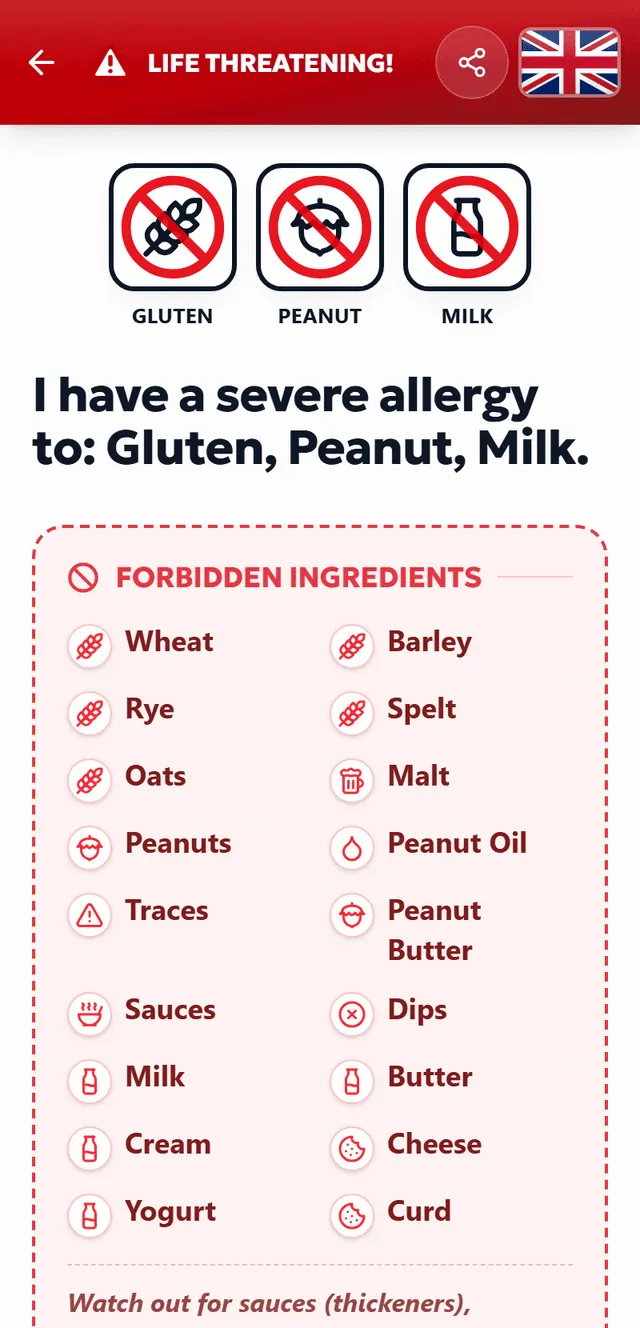
Your allergy card for Mexico, shown to staff in Spanish
From a peanut-laced mole in Puebla to queso melted into everything in Oaxaca, Mexican kitchens hide allergens in plain sight. TrustBite shows waiters and cooks a clear allergy card in Spanish — one of 24 languages — that works offline, and lets you scan barcodes and menus for a fast green, yellow or red read.
Create & print your card →
The allergen traps in Mexican cooking
Mole sauces (mole poblano, mole negro) routinely blend peanuts (cacahuate), almonds (almendra) and sesame (ajonjolí) — a triple nut-and-seed hazard poured over chicken and enchiladas. Chiles en nogada are draped in a walnut cream. Dairy is relentless: crema, queso fresco, Oaxaca cheese and cotija top tacos, quesadillas, elotes and soups. Egg appears in the batter (capeado) of chiles rellenos and in tortas. Coastal menus lean on fish and shellfish — ceviche, camarones, pulpo, caldo de mariscos. Corn tortillas are naturally wheat-free, but flour tortillas (harina de trigo), breaded and beer-battered dishes, and shared comales and fryers add gluten and cross-contact risk.
Why a Spanish card beats a printed one
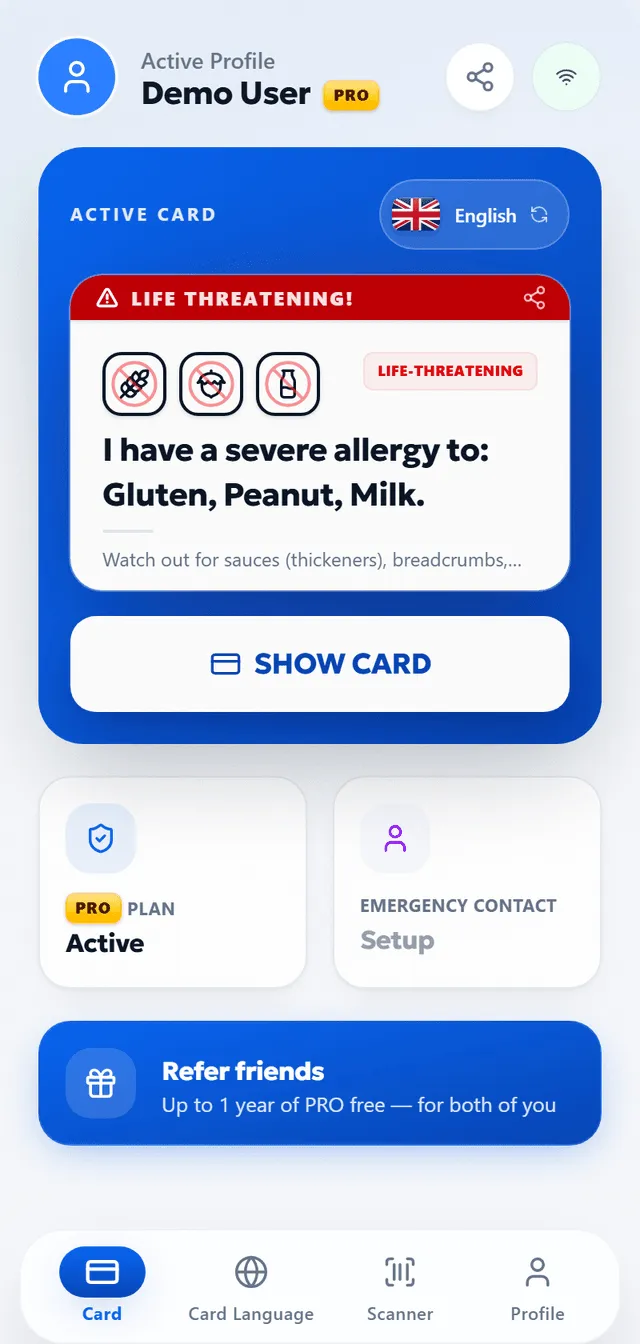
A single printed card covers one language and one wording. TrustBite carries all 14 EU-regulated allergens with severity levels, and shows staff a precise card in Spanish — plus Japanese, Chinese, Thai, Arabic and 20 more if your trip continues. It works fully offline, so a rural cocina, a market stall or a spotty-signal beach town is no obstacle. You can also add an emergency (ICE) contact right on the card, so anyone helping you can reach someone fast.
Scan barcodes and menus before you order
At an OXXO or supermercado, scan a packaged product's barcode and TrustBite checks Open Food Facts, returning a green, yellow or red verdict against your profile. Facing a Spanish-only menu or an unlabelled dish, use AI photo and AI menu analysis to flag likely allergens before you commit. It is free to start, with unlimited barcode scanning included and an optional Pro upgrade that lifts the daily limits on the AI analyses — built to reduce the guesswork, never to replace a direct conversation with the kitchen.
FAQ
Does the allergy card work without internet in Mexico?
Yes. The Spanish allergy card is stored on your device and displays fully offline, so you can show it in a remote cocina, a market or a beach town with no signal. Barcode and AI menu scanning need a connection, but the card itself never does.
Which Mexican dishes most often hide nuts or sesame?
Mole sauces are the classic trap — many recipes contain peanuts, almonds and sesame together. Chiles en nogada use a walnut cream, and garnishes are often sprinkled with sesame (ajonjolí). Always confirm with staff, because recipes vary by region and cook.
Is Spanish enough, or should I learn the key words too?
TrustBite's card does the explaining in clear Spanish, but it helps to recognise a few terms: leche/lácteos (dairy), queso (cheese), huevo (egg), cacahuate (peanut), nuez and almendra (nuts), ajonjolí (sesame), trigo (wheat), mariscos (shellfish) and pescado (fish). 'Sin' means 'without'.
Can TrustBite guarantee a dish is safe to eat?
No. TrustBite is an aid that helps you communicate and check labels — it cannot guarantee any dish is free of allergens or cross-contact. Always verify directly with restaurant staff, and if you have a severe reaction, call local emergency services on 911 in Mexico immediately.
TrustBite is an aid to help you communicate allergies and check food information — it is not a medical device and does not provide medical advice. It cannot guarantee that any dish or product is free of allergens or cross-contamination. Always verify your allergies directly with restaurant staff before eating, and follow your doctor's guidance. In a severe allergic reaction, use your prescribed emergency medication and call local emergency services immediately — in Mexico, dial 911.