Travel with food allergies
Your allergy card for Indonesia — in Indonesian, offline
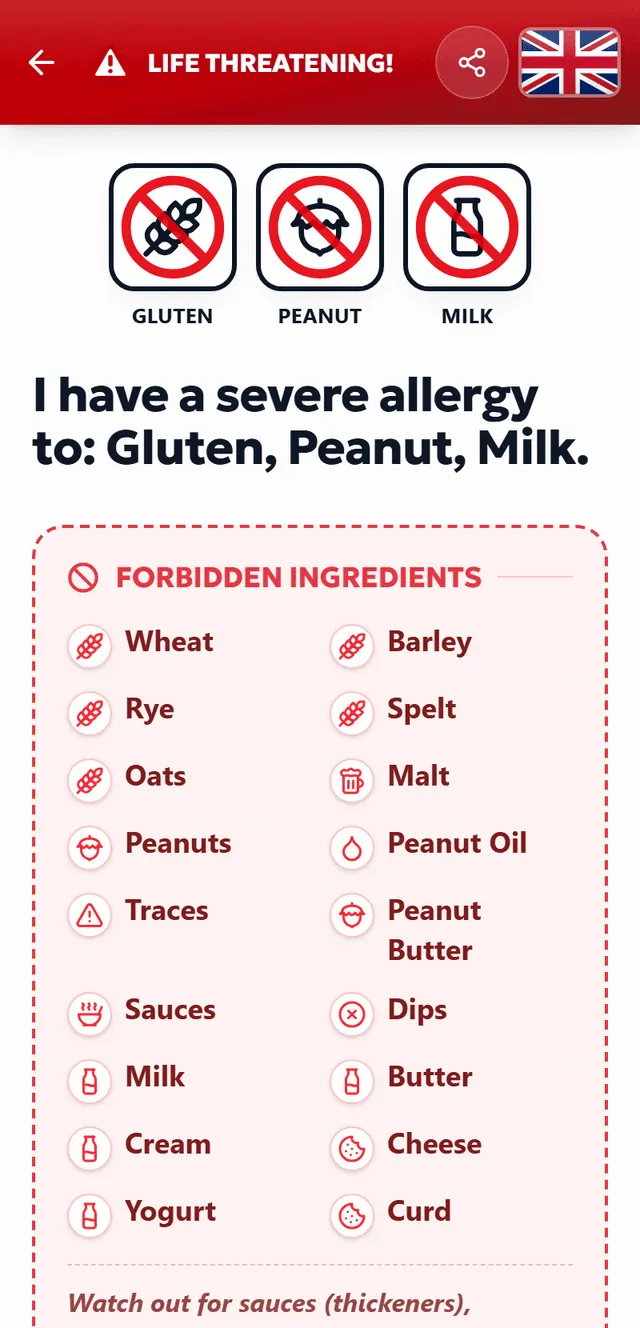
Sate drenched in peanut sauce, sambal built on shrimp paste, kecap manis in nearly every stir-fry — Indonesia's food is glorious and full of hidden allergen traps. TrustBite shows restaurant and warung staff a clear allergy card written in Bahasa Indonesia, one of 24 languages, and it works with no signal. It also scans product barcodes and reads menus, so a single printed card is no longer your only defense.
Create & print your card →
The allergen traps hiding in Indonesian cuisine
Peanut (kacang) is everywhere: the bumbu kacang sauce over sate, gado-gado, ketoprak, pecel and karedok is peanut-based, and cross-contact is routine. Terasi (shrimp paste, also called belacan) sits at the heart of most sambal, nasi goreng and vegetable dishes — a serious risk for crustacean and shellfish allergies. Kecap manis, the sweet soy sauce splashed on almost everything, carries both soy and often wheat/gluten. Watch for candlenut (kemiri, a tree nut) in spice pastes, dried anchovies (ikan teri) and fish sauce, egg in martabak and nasi goreng, wheat egg noodles (mie), and kerupuk crackers that are frequently made from shrimp. TrustBite spells these out for staff in their own language.
A card staff actually understand — in Bahasa Indonesia
A printed card in English only helps if the person reading it speaks English, and many warung and street-food vendors do not. TrustBite generates a clean, unambiguous allergy card in Indonesian, listing your specific allergens from the 14 EU-regulated groups — including peanut, tree nut, crustacean, mollusc, fish, soy, gluten, egg and sesame — with severity levels so staff grasp how serious it is. The card also works fully offline, so it is ready in a remote night market or an island beach warung with no mobile data at all.
More than a card: scan barcodes and menus on the go
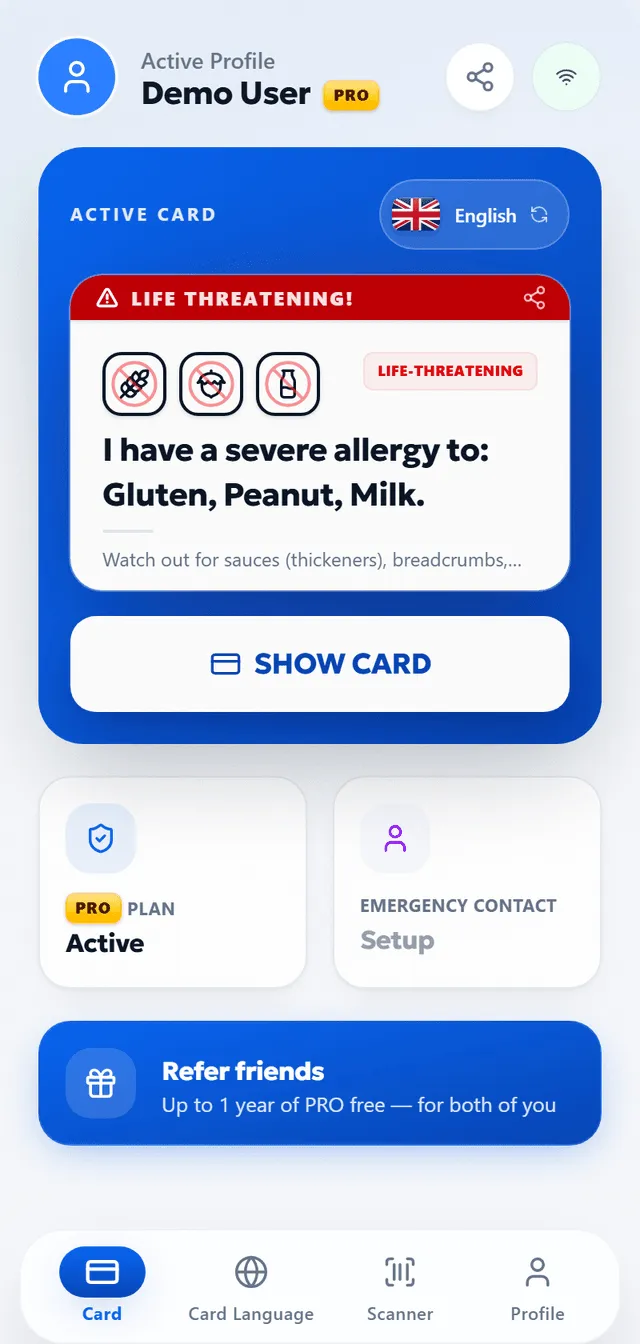
Beyond the card, TrustBite scans packaged-product barcodes against the Open Food Facts database and returns a simple green, yellow or red verdict for your profile — handy in an Indomaret or Alfamart minimarket. Point the camera at a menu or a plate and the AI reads the dishes and flags likely allergens for you to double-check. You can also store an emergency (ICE) contact right on the card. TrustBite is free, including unlimited barcode scanning; an optional Pro upgrade lifts the daily limits on the AI analysis — far more flexible than one static printed card per country.
FAQ
Does the allergy card really work offline in Indonesia?
Yes. Once your profile is set up, the Indonesian-language allergy card displays with no internet connection, so you can show it in a rural warung, a night market or on an island with no signal. Barcode and AI menu scanning need a connection, but the card itself does not.
Which Indonesian dishes are the biggest allergen risks?
Peanut-sauce dishes like sate, gado-gado and pecel top the list for peanut allergies. Terasi (shrimp paste) in sambal and nasi goreng is a major crustacean risk, kecap manis brings soy and often wheat, and candlenut (kemiri) in spice pastes is a tree nut. Kerupuk crackers are often shrimp-based. Always confirm with staff using your card.
Is TrustBite a medical device?
No. TrustBite is a communication and information aid to help you explain your allergies and check products. It is not a medical device and does not diagnose, treat or guarantee safety. Always verify ingredients directly with restaurant staff and carry any medication your doctor prescribes.
How many languages does the card support, and is the app free?
The card is available in 24 languages, including Indonesian, Japanese, Chinese, Thai and Arabic — useful across a whole Southeast Asia trip. The app is free to download and use, with barcode scanning always free and unlimited, and an optional Pro subscription that lifts the daily limits on the AI photo and menu analysis.
TrustBite is an aid for communication and information, not a medical device. It does not diagnose or treat any condition and cannot guarantee a meal is safe. Allergen information may be incomplete or out of date, and cross-contamination is always possible. Always verify your allergies and every dish directly with restaurant staff, and carry any medication prescribed by your doctor. In a severe reaction, call local emergency services immediately (in Indonesia, dial 112).