Allergy travel - India
Your Allergy Card in Hindi for Eating Out in India
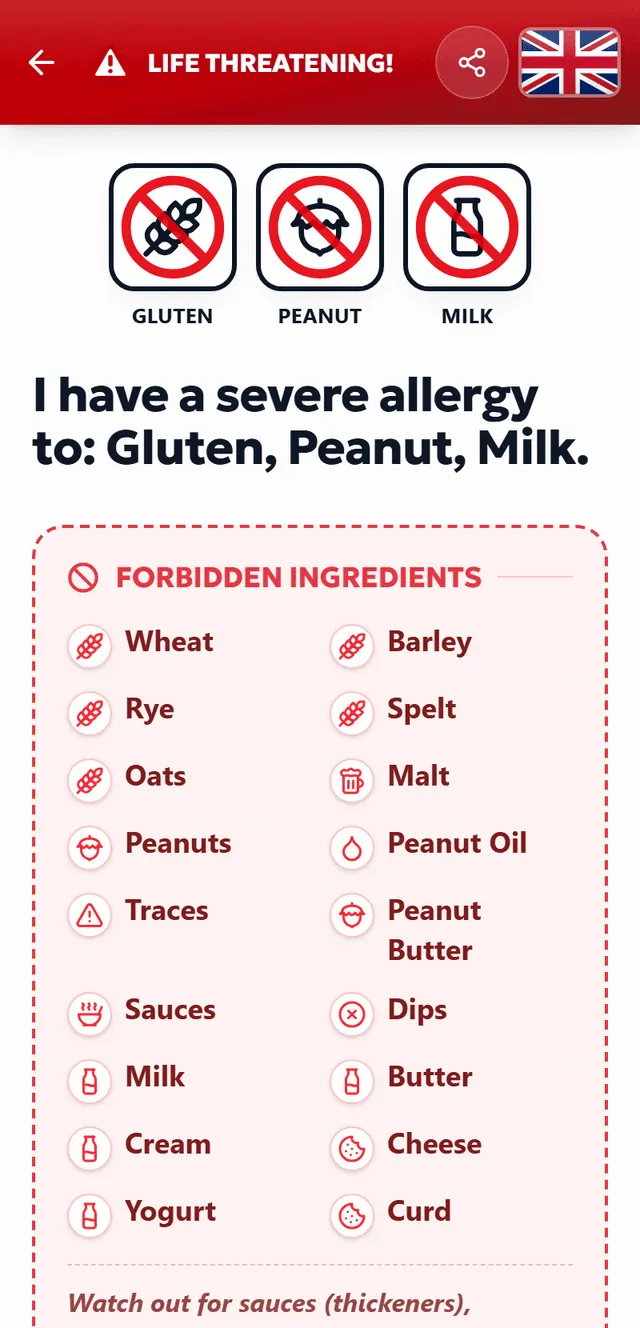
Indian kitchens layer allergens into gravies, oils and spice blends in ways a menu never shows. TrustBite lets you hand restaurant staff a clear allergen card in Hindi - working fully offline - and scan barcodes and menu photos so you can travel from Delhi to Kerala with fewer nasty surprises.
Create & print your card →
The real allergen traps in Indian food
Cashew (kaju) paste secretly thickens creamy curries like korma, shahi paneer and kaju curry, and shows up in kheer and mithai sweets. Dairy is everywhere: ghee for frying, paneer, cream (malai), curd marinades, butter chicken and lassi. Peanut and groundnut oil are common in chaat, poha and chutneys, plus peanut chikki. Mustard oil (sarso) is the base fat across North Indian and Bengali cooking and hides in pickles (achaar) and tempering (tadka). Sesame (til) fills sweets and oils. Wheat/gluten is in roti, naan, paratha and puri - and asafoetida (hing) is often cut with wheat flour, a hidden trap. Coastal and Bengali menus add fish, shrimp and shellfish.
Why a card in Hindi beats a printed sheet
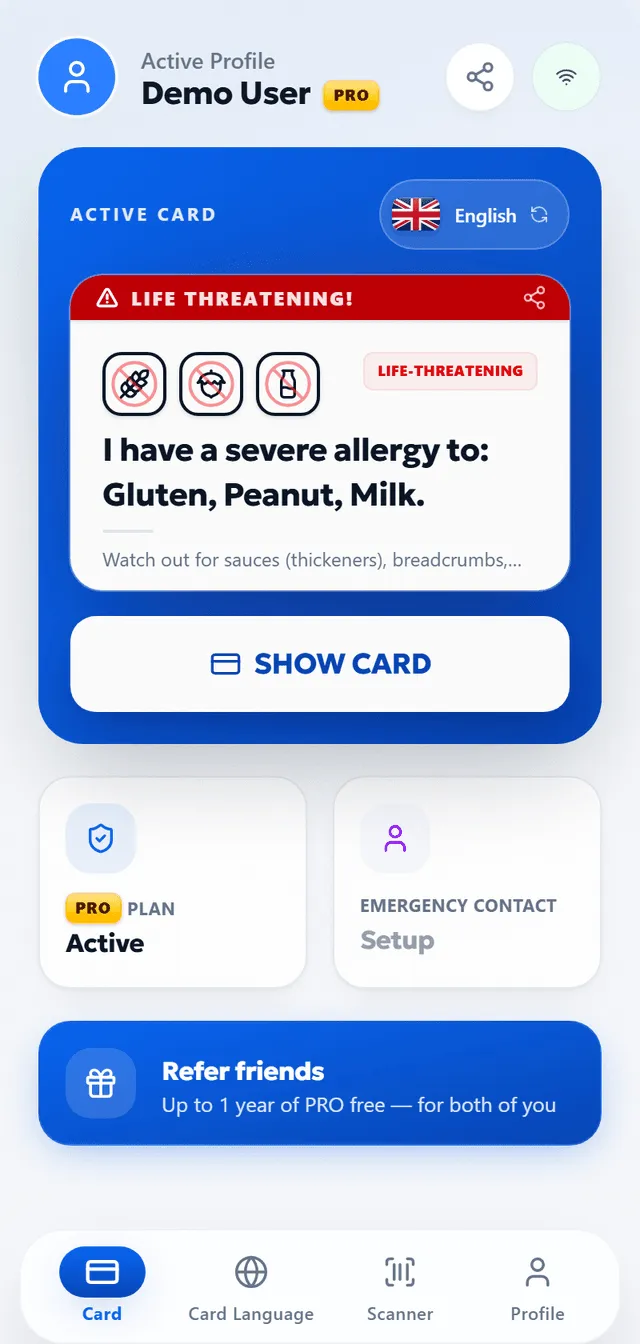
A single printed card usually covers one language and one country. TrustBite carries your allergens in 24 languages - Hindi for much of India, plus English, and languages like Bengali-region travel needs where staff switch tongues. Pick your allergens from all 14 EU-regulated groups, add severity levels, and the app builds a clear card that names exactly what you must avoid. It works offline, so a roadside dhaba with no signal is no problem, and you are never stuck retyping or re-translating on the spot.
Scan barcodes and menus on the move
Beyond the card, TrustBite scans packaged-food barcodes against the Open Food Facts database and returns a simple green, yellow or red verdict - handy for railway-station snacks and supermarket buys. Point the AI photo and menu scanner at a dish or a printed menu to flag likely allergens before you order. You can add an emergency (ICE) contact right on the card. TrustBite is free, including unlimited barcode scanning; an optional Pro upgrade lifts the daily limits on the full AI analysis.
FAQ
Does the allergy card work without internet in India?
Yes. Once TrustBite is set up, your allergen card displays fully offline, so you can show it to staff at a remote dhaba, a train pantry or a village restaurant with no mobile signal. Barcode and AI scanning need a connection, but the card itself does not.
Which Indian dishes hide allergens I might miss?
Watch cashew in korma and shahi paneer, dairy and ghee in almost everything, peanut and groundnut oil in chaat and chikki, mustard oil and pickles, sesame in sweets, and wheat inside asafoetida (hing). Coastal menus add fish and shellfish. TrustBite's Hindi card helps you ask staff about these directly.
Is Hindi enough to communicate everywhere in India?
Hindi is widely understood across much of northern and central India, and TrustBite also carries English plus 22 other languages you can switch to instantly. Show whichever language the staff read most comfortably - the app keeps your allergens consistent across all of them.
Is TrustBite a medical device?
No. TrustBite is a communication and information aid, not a medical device, and it does not diagnose or guarantee a dish is safe. Always confirm ingredients with restaurant staff and carry any medication your doctor prescribes. In a severe reaction, call local emergency services immediately (dial 112 in India).
TrustBite is an information and communication aid, not a medical device. It does not diagnose allergies or guarantee that any food is safe. Ingredients, recipes and cross-contamination practices vary, so always verify directly with restaurant staff before eating and carry any medication your doctor has prescribed. If you experience a severe allergic reaction, call local emergency services immediately (dial 112 in India).