Travel with food allergies · France
Your allergy card for France — in French, offline, ready
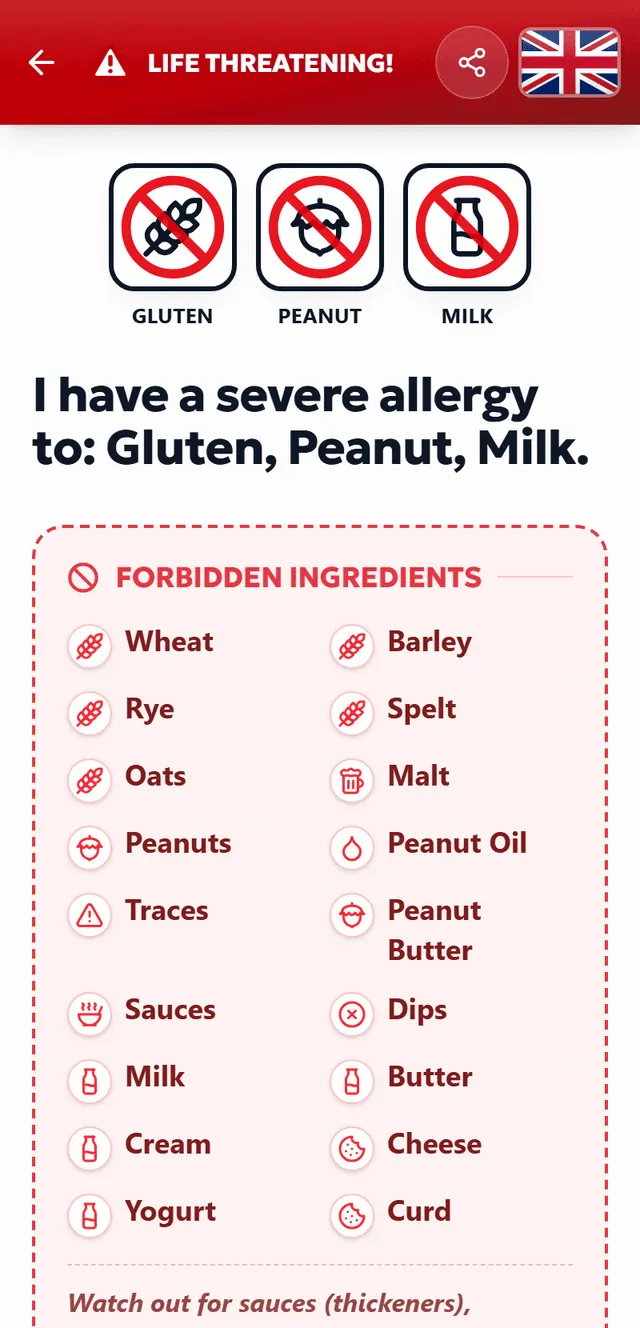
France runs on butter, cream and flour-thickened sauces, so a quick verbal "no dairy" rarely survives the kitchen. TrustBite hands the serveur a clear allergen card written in French — even with no signal — then lets you scan barcodes and menus so you decide what is safe before you order.
Create & print your card →
Why a French-language card beats a printed one
A single printed card covers one language and one list. TrustBite shows your exact allergens in French so the waiter and kitchen read it without guesswork, and you carry the same card in 24 languages if your trip continues to Italy, Spain or beyond. It works fully offline in a rural Provence bistro with no reception, you can keep separate profiles for each traveler, and your ICE emergency contact sits right on the card. Barcode scanning is always free and unlimited; Pro lifts the daily limits on the AI photo and menu analysis when you want a second read on a dish.
French dishes and ingredients worth flagging
Dairy hides almost everywhere: beurre blanc, sauce béchamel, gratins, crème fraîche stirred into soups, and the butter finish on a steak or vegetables. Many classic sauces are thickened with wheat flour (roux) — think blanquette, sauce velouté or a floured pan sauce — so gluten shows up far from any visible bread. Ask specifically about the sauce, not just the main. Patisserie is a nut minefield: frangipane (almond) in galette and tarts, praliné and noisette in chocolates, pistachio and hazelnut in éclairs and macarons. Bread arrives unrequested at almost every table. When in doubt, say 'je suis allergique' and show the card rather than trusting a nod.
How TrustBite works while you travel
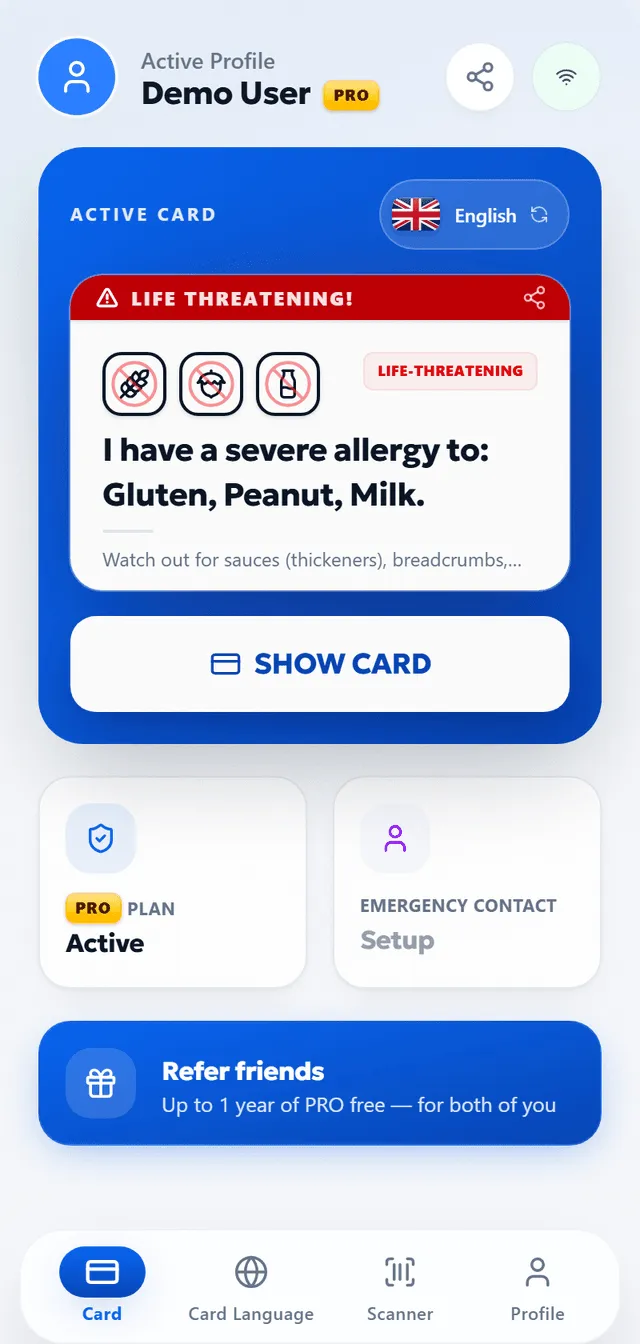
Set up your profile once with your allergens and severity, from all 14 EU-regulated allergens including gluten, milk, egg, peanut, tree nut, fish, shellfish, soy, sesame, mustard, celery, sulphites, lupin and molluscs. In a restaurant, open the card and hand your phone to staff — the French text explains what you cannot eat. At a supermarché or épicerie, scan a product barcode against Open Food Facts for a green, yellow or red verdict, or point the camera at a menu or dish for an AI reading. Everything the card needs is stored on the device, so a dead zone never leaves you stuck.
FAQ
Does the allergy card work without internet in France?
Yes. The allergen card renders fully offline once TrustBite is installed, so you can show it in a countryside restaurant with no signal. Barcode scanning, AI photo analysis and menu scanning need a connection, but the core card does not.
Is the card actually written in French?
Yes. French is one of TrustBite's 24 card languages, so restaurant staff read your allergens in their own language. You can switch the same card to Japanese, Chinese, Thai, Arabic and 20 more if your travels continue elsewhere.
How do I handle dairy and flour sauces at a French restaurant?
Show the card and ask directly about the sauce, since butter, cream and flour-thickened roux appear in dishes that look plain. TrustBite's AI menu scan can flag likely hidden dairy or gluten, but always confirm with the kitchen before ordering.
Is TrustBite free, and is it a medical device?
The core allergy card and unlimited barcode scanning are free; Pro lifts the daily limits on the AI photo and menu analysis. TrustBite is an aid to communication and label reading, not a medical device, and does not diagnose or guarantee safety.
TrustBite is a communication and information aid, not a medical device. It does not diagnose conditions, guarantee a dish or product is safe, or replace professional medical advice. Always confirm your allergens directly with restaurant staff and read product labels yourself, as recipes and ingredients change. If you experience a severe allergic reaction, call the local emergency services immediately (112 in France and across the EU).