For travellers with food allergies
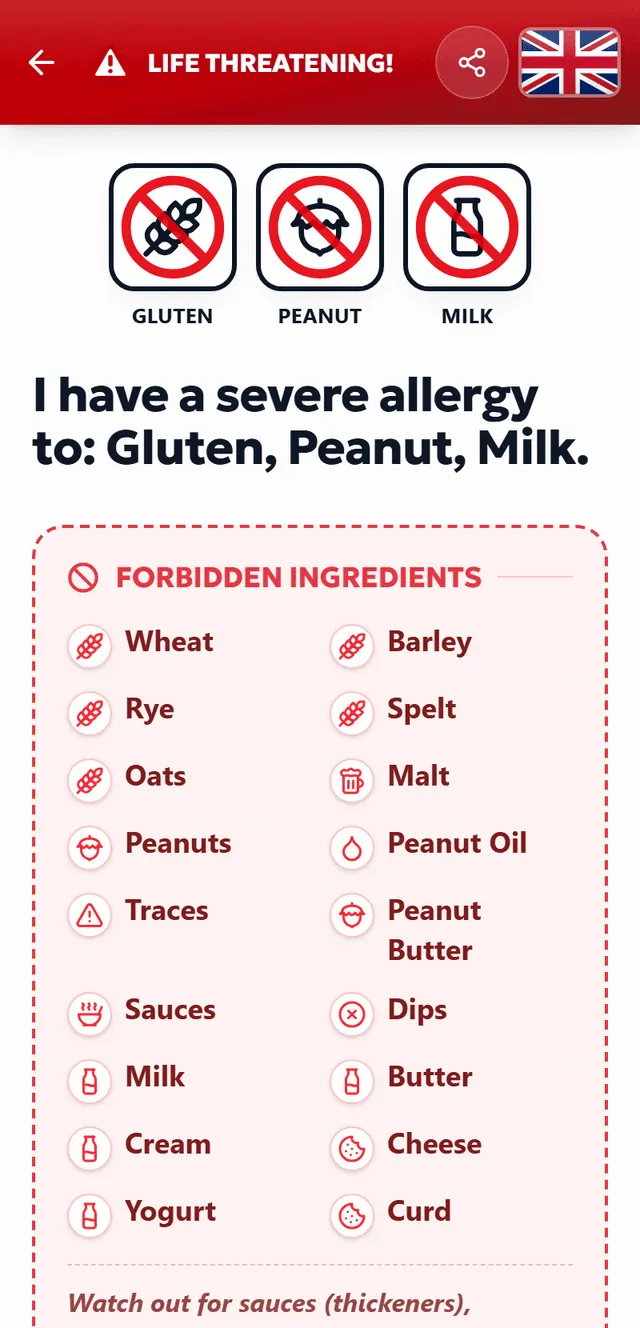
Your Allergy Card for the Czech Republic — in Czech
Czech comfort food hides allergens in roux-thickened sauces, breaded classics and dumplings. TrustBite shows waitstaff a clear allergy card in Czech (one of 24 languages), works fully offline, and lets you scan barcodes and menus on the spot — far more flexible than a single printed card.
Create & print your card →
Czech allergen traps worth knowing
Traditional Czech cooking leans on wheat, dairy, egg and celery. Knedlíky (bread and potato dumplings) that accompany almost every main are wheat- and often egg-based. Svíčková na smetaně and most guláš are thickened with a flour-and-fat roux (jíška) and finished with cream, so they carry gluten and milk — and svíčková's root-vegetable base frequently includes celery (celer), a top hidden allergen in Czech soups and sauces. Breaded favourites like smažený sýr (fried cheese), řízek (schnitzel) and bramboráky (potato pancakes) combine wheat, egg and dairy.
Beyond the plate: desserts, fish and condiments
Sweet Prague street food is loaded with allergens: trdelník and koláče contain wheat, milk, egg and often nuts, while poppy seed (mák) and walnuts appear in buchty and cakes. Tatarák (beef tartare) is served with topinky — fried bread rubbed with garlic. At Christmas, breaded fried carp (kapr) brings fish and gluten together. Sausages come with mustard (hořčice), and pickled utopenci sit in vinegar brine. When a dish is described only as 'domácí' (homemade), the recipe can vary, so confirming with staff matters.
Why a Czech-language app beats a printed card
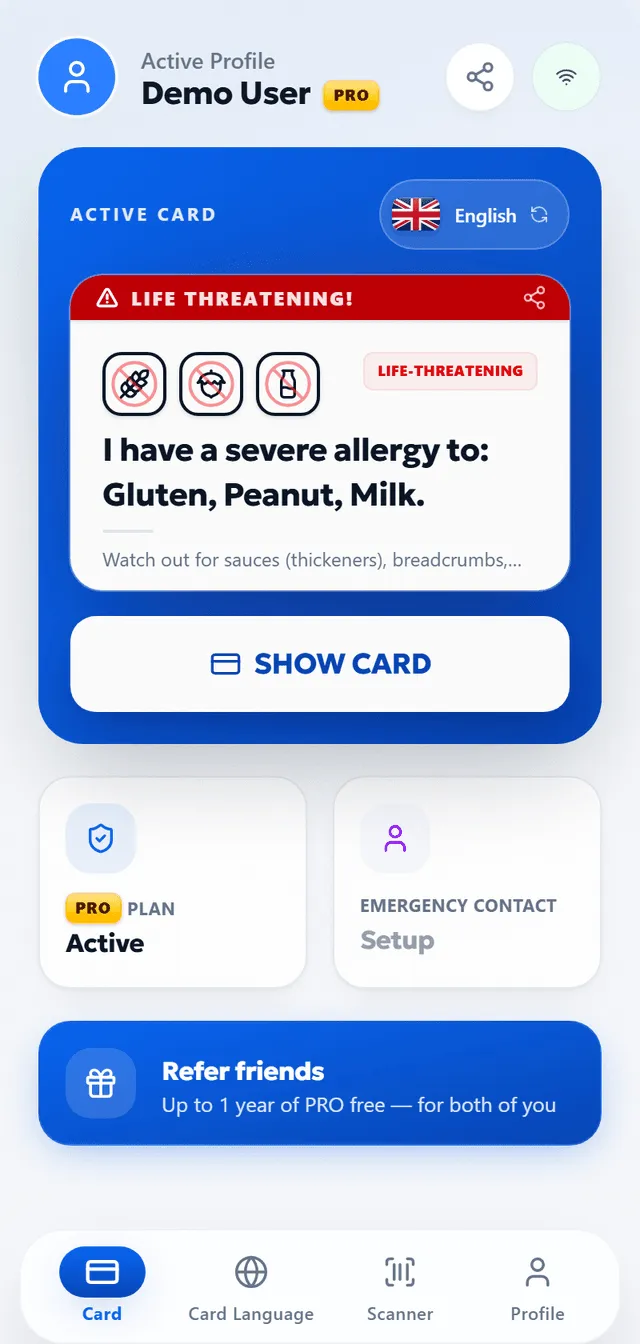
A printed card only speaks one language and can't adapt when the kitchen or the menu changes. TrustBite generates an allergy card in Czech that names exactly your allergens across all 14 EU-regulated categories, with severity levels so staff grasp how serious a reaction could be — and it works offline when your data drops in a rural pension. Scan a supermarket barcode (via Open Food Facts) for a green/yellow/red verdict, photograph an unfamiliar menu or dish for AI analysis, and keep an emergency (ICE) contact right on the card. Free to use, with unlimited barcode scanning included; optional Pro lifts the daily limits on the AI analyses.
FAQ
How do I say my allergy to Czech restaurant staff?
TrustBite does it for you: it shows a written allergy card in Czech that names your specific allergens, so you don't have to pronounce phrases like 'Mám alergii na...'. Staff read the card, and you can point to the severity level. It's clearer and less error-prone than speaking under pressure.
Which allergens should I watch for in Czech cuisine?
The most common traps are wheat/gluten (dumplings, breaded dishes, roux-thickened sauces), milk and cream (svíčková, fried cheese), egg (breading, dumplings, pastries), celery (soups and meat sauces) and nuts/poppy seed (desserts and trdelník). TrustBite covers all 14 EU-regulated allergens on the card.
Does the allergy card work without internet?
Yes. The Czech allergy card is stored on your phone and displays fully offline, which is useful in smaller towns and rural restaurants. Barcode, photo and menu scanning use AI and need a connection, but the card itself never does.
Is TrustBite a medical device?
No. TrustBite is an aid to help you communicate and check foods, not a medical device and not a diagnosis. Always confirm ingredients directly with restaurant staff, and if you have a severe reaction, call local emergency services (112 in the Czech Republic) immediately.
TrustBite is an aid to help you communicate about food allergies — it is not a medical device and does not provide medical advice or diagnosis. Ingredients, recipes and preparation can change, and cross-contamination is always possible, so verify every dish directly with restaurant staff before eating. Scan results and translations may contain errors. If you experience a severe allergic reaction, seek medical help and call local emergency services immediately (112 in the Czech Republic).