Travel with food allergies · China
Your food allergy card in Chinese, ready before the food hits the wok
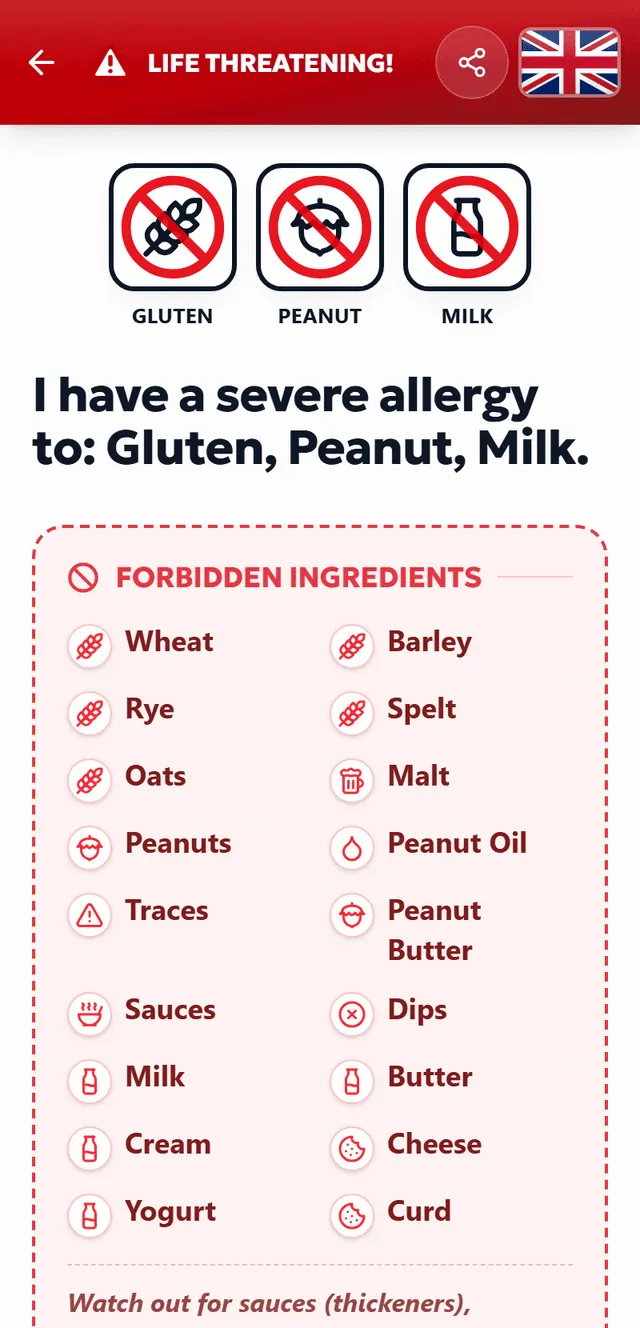
Traveling in China with allergies means navigating soy and wheat in nearly every sauce, peanut oil in the wok, and sesame on the side. TrustBite shows restaurant staff a clear allergen card written in Chinese — and it works offline when you have no signal. Scan barcodes and photograph menus to catch the traps you can't read.
Create & print your card →
Why one printable card isn't enough in China
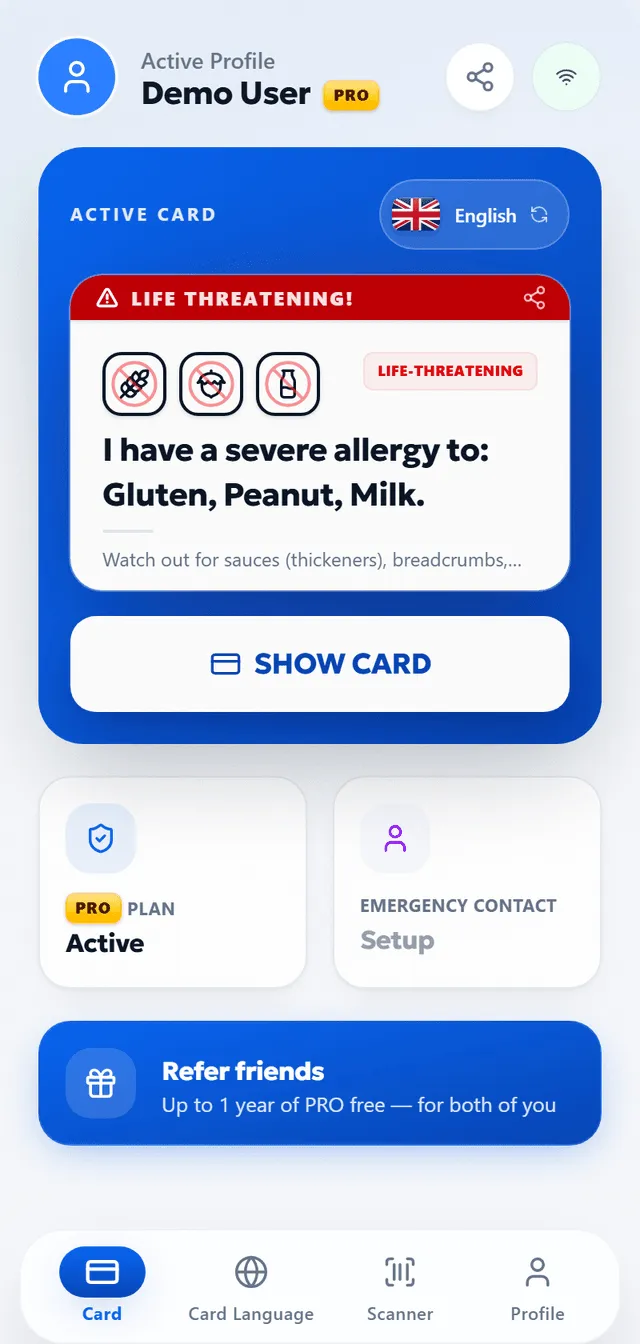
A single paper card is fixed the moment you print it. TrustBite carries the same allergen card in 24 languages, so the version you hand a waiter in Chengdu is written in clear, simplified Chinese — and switches instantly if you cross into a Cantonese-speaking region or fly on to another country. It loads without internet, so a dead SIM in a rural noodle shop doesn't leave you stranded. Barcode scanning is free and unlimited; optional Pro lifts the daily limits on AI menu reading, and the core card is free.
The China dishes and ingredients worth naming out loud
Soy sauce (酱油) and light soy are in stir-fries, dumpling dips, braises, and 'plain' vegetables — a wheat-and-soy double hit, since most Chinese soy sauce is brewed with wheat. Peanut oil (花生油) is a default cooking fat, and dishes like kung pao chicken (宫保鸡丁) and cold noodles hide whole peanuts and peanut paste. Sesame oil (香麻油) finishes soups, dumplings, and dan dan noodles; tahini-style sesame paste coats hot pot dips and liangpi. Shellfish and dried shrimp (虾米) turn up in XO sauce, fried rice, and stock you'd never suspect. And the wok itself is a cross-contamination machine — the same unwashed pan and oil move from a shrimp dish to your 'safe' greens in seconds. TrustBite's card lets you ask staff to change the oil and use a clean wok, in words they can actually read.
Card, scanner, and menu-reader in one app
The allergen card names all 14 EU-regulated allergens with severity levels, so you can flag a life-threatening peanut allergy differently from a mild intolerance, and it holds an emergency (ICE) contact right on the card. In supermarkets and convenience stores, scan a product barcode against Open Food Facts for a green, yellow, or red verdict. When a menu has no English and no pictures, snap a photo and let the AI flag likely allergens dish by dish. It's a practical travel toolkit — not a promise that any kitchen is risk-free.
FAQ
Does the allergy card actually display in Chinese?
Yes. Chinese is one of TrustBite's 24 card languages, alongside Japanese, Thai, Arabic and more. You show your phone to the waiter and they read your allergens and requests in their own language — no translation app or hand gestures needed.
Will it work without internet or a Chinese SIM card?
The allergen card is stored on your phone and displays fully offline, which matters in China where roaming and local data can be unreliable. Barcode scanning and AI menu analysis need a connection, but the core card you show staff never does.
Can it help with soy, wheat and peanut oil specifically?
Yes. All 14 EU-regulated allergens — including peanut, tree nut, soy, gluten/wheat, sesame, fish, shellfish and molluscs — are on the card with severity levels. You can also ask staff, in Chinese, to use a clean wok and change the cooking oil to reduce cross-contamination.
Is TrustBite a medical device or a guarantee of safety?
No. TrustBite is an aid to help you communicate and check ingredients — it is not a medical device and cannot guarantee any dish is safe. Always confirm with restaurant staff, carry any prescribed medication such as an adrenaline auto-injector, and call local emergency services immediately if you have a severe reaction.
TrustBite is a communication and information aid, not a medical device. It does not diagnose, treat, or guarantee that any food or dish is safe. Ingredients, recipes, and kitchen practices in China change without notice and cross-contamination in shared woks is common — always verify directly with restaurant staff, read labels yourself, and carry any medication your doctor has prescribed. In a severe allergic reaction, call China's emergency medical number 120 (or your local emergency number) immediately.