Travel with food allergies
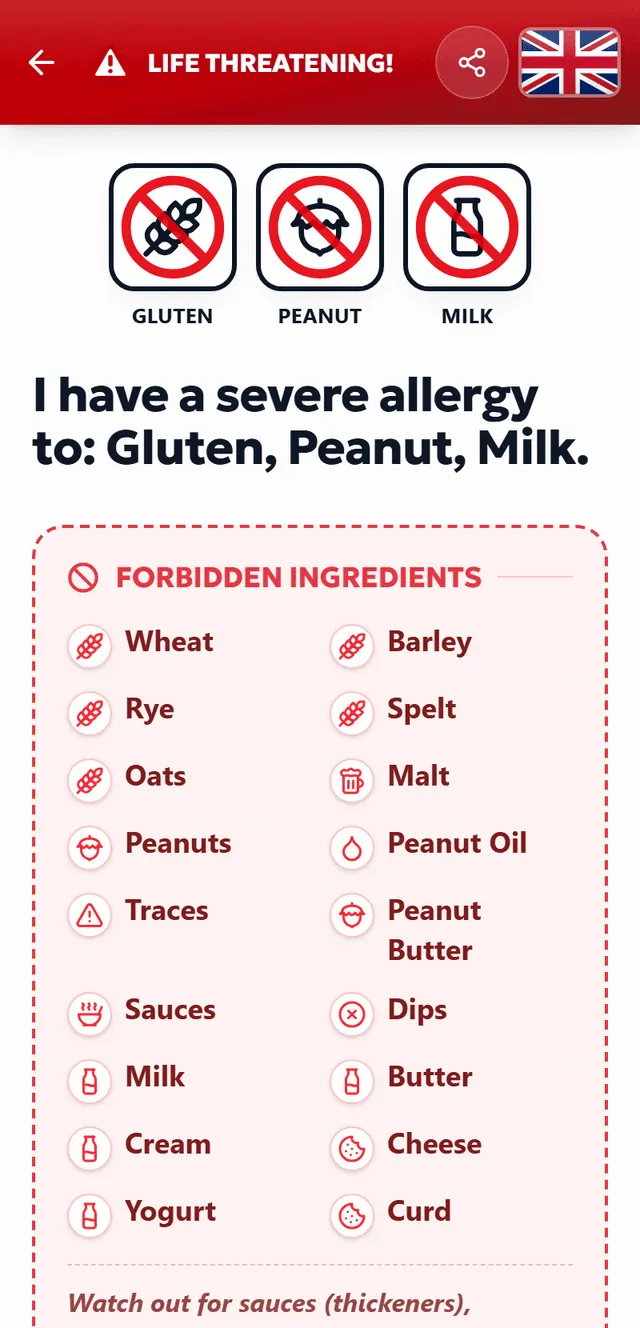
Allergy Card for Brazil, in Portuguese
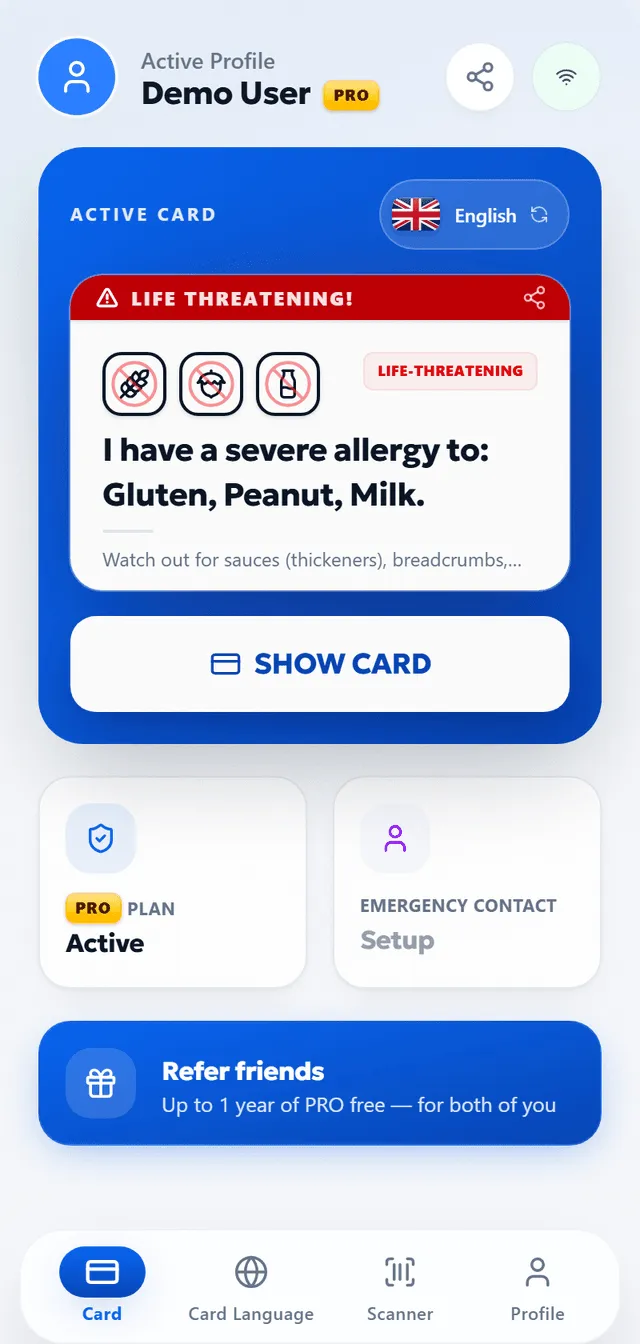
From acarajé stalls in Salvador to a churrascaria in São Paulo, TrustBite shows waiters and cooks exactly what you cannot eat — written clearly in Portuguese, one of 24 card languages. It works fully offline, and you can scan barcodes and menus to catch hidden allergens. Free to download for iPhone and Android.
Create & print your card →
The allergen traps hiding in Brazilian food
Brazilian cooking is generous with ingredients that catch travellers off guard. Peanut (amendoim) turns up in paçoca, pé de moleque and festa junina sweets, and it is a core ingredient in Bahian vatapá — which also blends cashews (castanha de caju) and dried shrimp (camarão seco), so a single dish can hide peanut, tree nut and shellfish at once. Acarajé is fried in dendê (palm oil) and typically filled with that same vatapá and dried shrimp. Seafood runs deep in the northeast: moqueca, bobó de camarão and casquinha de siri all centre on shrimp or crab. Dairy is everywhere too — brigadeiro and countless doces rely on condensed milk (leite condensado), and pão de queijo is loaded with cheese and egg. Gluten hides in the shared fryer with coxinha and pastéis, and in the sausages of a hearty feijoada.
Why a Portuguese card beats a printed one
A printed card covers one country and one wording — and once it is folded into your wallet, it cannot answer follow-up questions or read a barcode. TrustBite keeps your full allergen profile on your phone and renders it as a clean card in Portuguese that staff can read at a glance, covering all 14 EU-regulated allergens with severity levels so a mild intolerance and a life-threatening allergy are never confused. Cross the border to Argentina or fly home and the same profile switches to Spanish, German or any of 24 languages — including Japanese, Chinese, Thai and Arabic. Your emergency (ICE) contact sits right on the card, so anyone helping you knows who to call.
Offline card, plus barcode and menu scanning
Signal is patchy on the road, so the allergy card is stored on your device and opens instantly with no connection — essential in a beach town or a rural pousada. Back online, point the barcode scanner at a supermarket product and TrustBite checks it against the Open Food Facts database, returning a simple green, yellow or red verdict. Snap a photo of a Portuguese menu and the AI menu analysis flags dishes worth questioning, while AI photo analysis reads a plate in front of you. Barcode scanning is free and unlimited; lifting the daily limits on the AI features is an optional Pro upgrade, and the multilingual card itself is free.
FAQ
Does the allergy card really work without internet in Brazil?
Yes. Once TrustBite is installed and your profile is set, the Portuguese allergy card is stored on your phone and opens with no signal — so it works in remote areas, on planes, and anywhere data is patchy. Barcode and menu scanning need a connection, but the card you show staff does not.
Which Brazilian dishes should I be most careful with?
Watch Bahian specialities like vatapá, acarajé and bobó de camarão (peanut, cashew and shrimp), peanut sweets such as paçoca and pé de moleque, dairy-heavy items like brigadeiro and pão de queijo, and anything from a shared deep fryer. Always confirm ingredients and cross-contact with staff using your card.
Is TrustBite free?
Yes. The multilingual allergy card, including Portuguese and 23 other languages, is free on iOS and Android. Barcode scanning is free and unlimited too; an optional Pro upgrade lifts the daily limits on the AI photo and menu analysis features.
Can staff understand the card if they only speak Portuguese?
Yes — that is the point. The card presents your allergens in clear Portuguese so Brazilian waiters and kitchen staff can read exactly what you must avoid, without you needing to translate or explain in another language.
TrustBite is an aid to communication, not a medical device, and does not diagnose, treat, or guarantee your safety. Always verify ingredients and cross-contamination risks directly with restaurant staff before eating. Information from barcode and AI scanning may be incomplete or inaccurate. In a severe allergic reaction, do not rely on this app — call local emergency services (dial 192 for SAMU or 193 in Brazil) immediately.