Travel with food allergies
Your Food Allergy Card in Turkish — Ready Before the Waiter Arrives
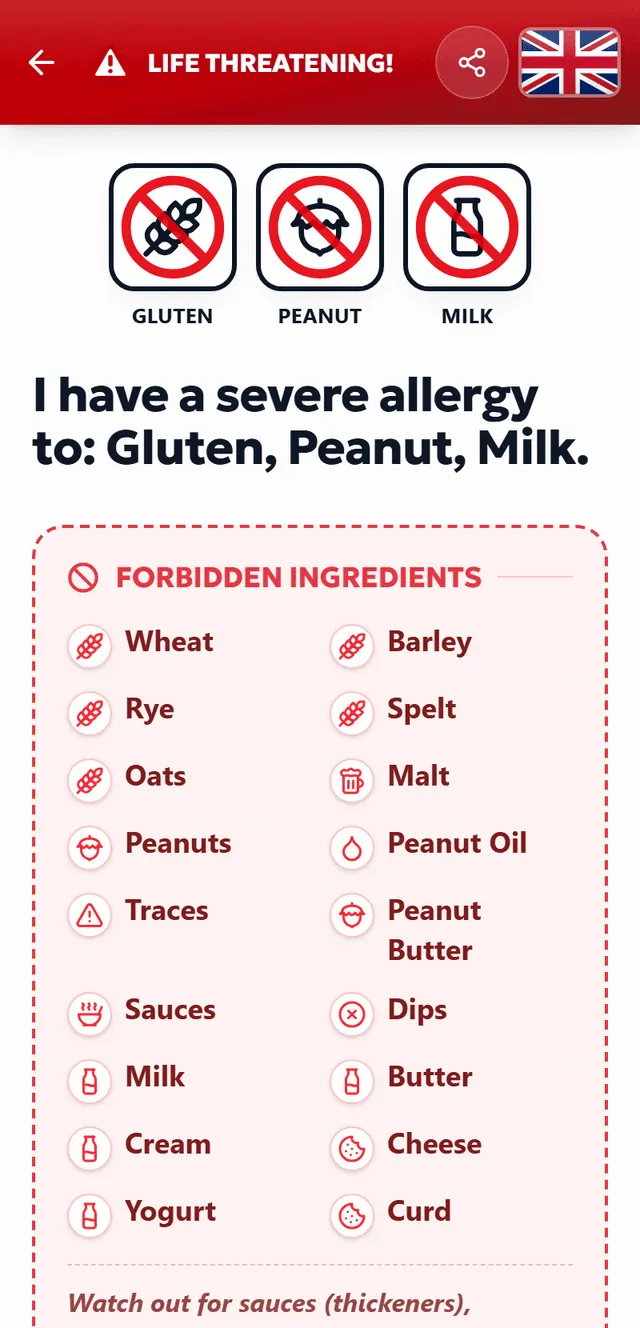
Turkish kitchens lean hard on nuts, sesame, bulgur and yogurt, and menu English is hit-or-miss. TrustBite shows staff a clear allergy card written in Turkish — one of 24 languages — and it works fully offline, so a weak signal in a Cappadocia cave restaurant is no problem. Scan barcodes and menu photos for a green, yellow or red verdict on 14 EU-regulated allergens.
Create & print your card →
Why a Turkish allergy card beats a printout
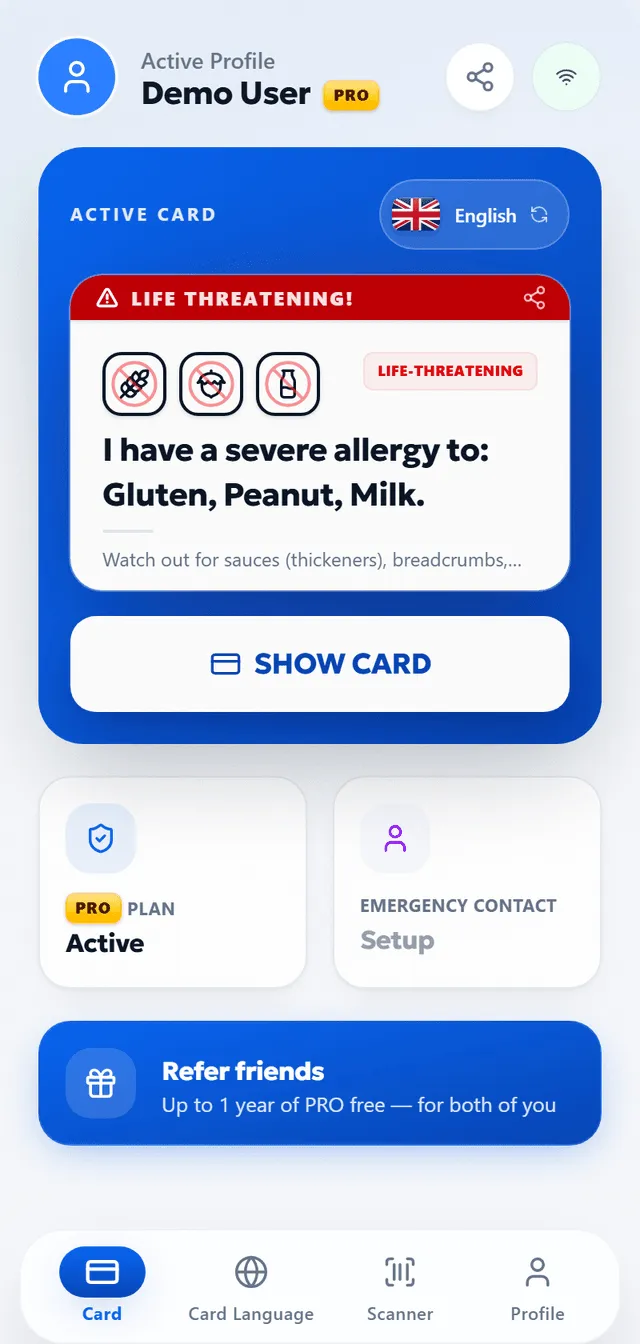
A single laminated card only covers one language and one wording. TrustBite generates a card in Turkish that names your exact allergens and severity, so the person cooking your meal reads it in their own language — not broken translation. Cross a border into Greece, Bulgaria or Georgia and the same app switches languages instantly. Because the card renders offline, you can hand your phone to a waiter in a bazaar tea house or a roadside lokanta without worrying about roaming data. You can also store an emergency (ICE) contact right on the card in case something goes wrong.
Turkish dishes and ingredients to watch
Nuts and sesame are everywhere: baklava, lokum (Turkish delight), tahini, and simit rolls crusted in sesame. Pistachio (Antep fıstığı) turns up in desserts, kebabs and even some cheeses. Wheat is central — bulgur fills köfte, kısır and stuffed vegetables (dolma), while manti dumplings and pide are pure wheat; ask about un (flour) as a thickener in sauces and çorba (soup). Dairy hides in plain sight: cacık and haydari are yogurt-based, ayran is a yogurt drink, and yogurt is spooned over mantı and many mains. For fish and shellfish, meze spreads and Aegean coastal menus carry real risk. When in doubt, say 'alerjim var' (I have an allergy) and show your card.
Scan barcodes and menus on the go
Grabbing snacks from a Migros or BİM? Scan the barcode and TrustBite checks it against the Open Food Facts database, then shows a green, yellow or red light for your profile. Faced with a Turkish-only menu, snap a photo and the AI menu analysis flags dishes that likely contain your allergens so you can narrow choices before you order. Free to use with unlimited barcode scanning and a few AI scans a day; optional Pro lifts the daily limits on the AI photo and menu analysis. It is an aid to help you communicate and decide — always confirm with staff before eating.
FAQ
Does the allergy card work without internet in Turkey?
Yes. The Turkish allergy card renders fully offline, so you can show it to restaurant staff even with no signal or roaming data. Barcode lookups and AI menu analysis need a connection, but the card itself never does.
Which allergens does TrustBite cover?
All 14 EU-regulated allergens, including gluten, peanut, tree nut, sesame, milk, egg, fish, shellfish and soy — the ones that matter most in Turkish cooking. You can set severity levels for each so the card reflects how serious your reaction is.
How do I say I have a food allergy in Turkish?
A useful phrase is 'alerjim var' (I have an allergy), followed by the ingredient, for example 'fıstık alerjim var' for a nut allergy. TrustBite's card spells out your specific allergens in Turkish so nothing is lost in translation.
Is TrustBite a medical device?
No. TrustBite is a communication and decision aid, not a medical device, and it cannot guarantee a dish is safe. Always confirm ingredients directly with restaurant staff, and if you have a severe reaction, call local emergency services immediately (112 in Turkey).
TrustBite is an aid to help you communicate food allergies, not a medical device, and it does not guarantee any dish is safe. Ingredients, recipes and cross-contamination practices vary by kitchen — always verify directly with restaurant staff before eating. If you experience a severe allergic reaction, seek medical help and call local emergency services immediately (112 in Turkey).